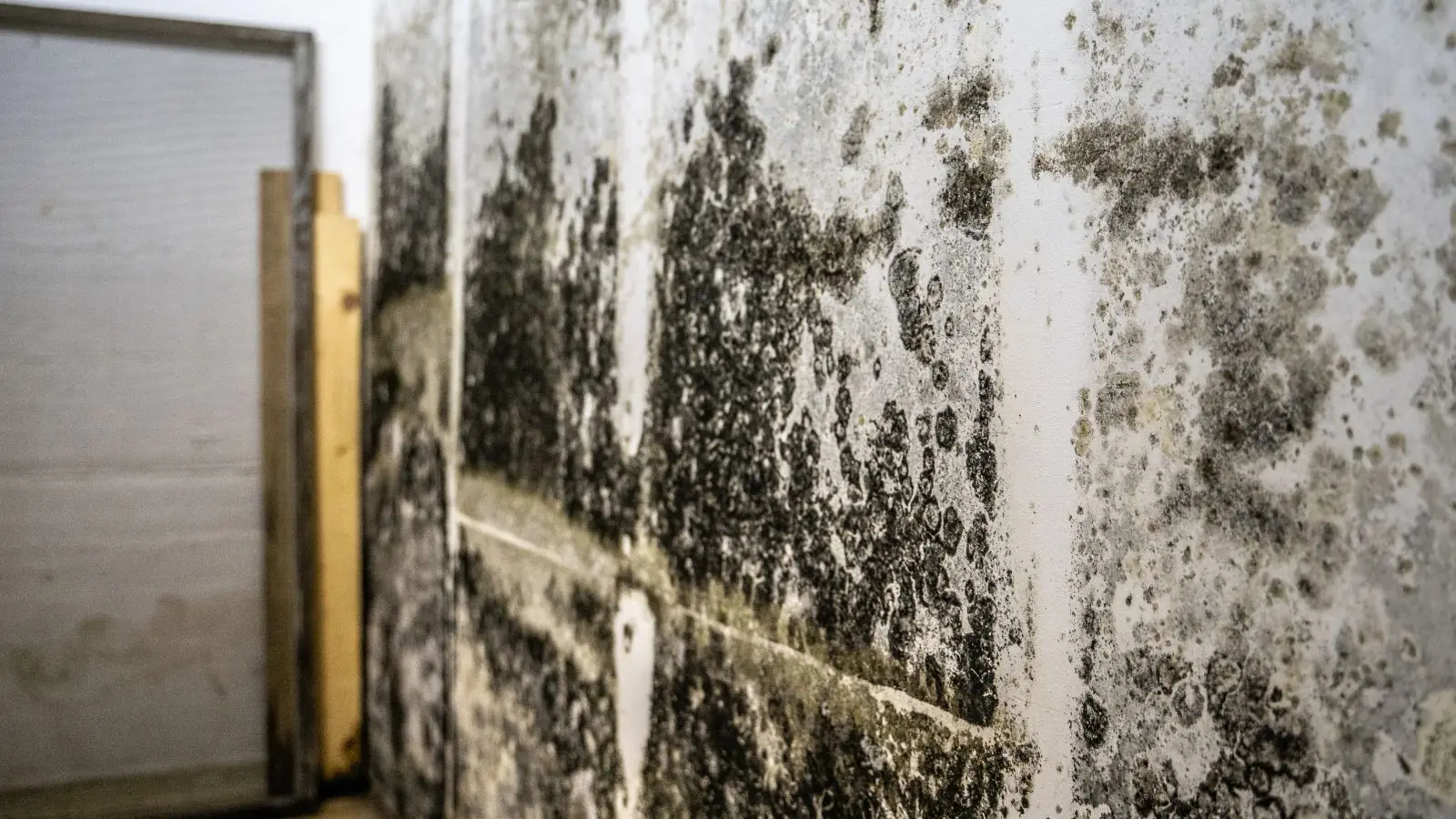
Basement mold removal is the controlled cleanup of mold growing on building materials in a lower-level room, paired with fixing the moisture that fed it. If your home has a basement or lower level in Lake Forest, CA, a musty corner can turn into a job larger than it looks from the stairs.
This guide follows a professional job from containment to drying. It then shows how to sort the jobs you can handle from the ones to hand off. Skip any step that does not fit your layout.
Start with the moisture, not the stain
Mold needs moisture, something organic to feed on, and time. Take away the moisture and growth stops spreading, so a good crew hunts for the source before touching a stained surface. Typical lower-level sources include a failed supply line, a leaking water heater, a clogged floor drain, a seeping slab and a window well that fills in a storm.
A plumber stops a leak. We do not do plumbing repair or waterproofing, so a broken pipe or a seeping wall needs the right trade first. Our part is the water removal, drying, mold remediation and rebuild around that repair.
How a professional job runs, step by step
Map the wet area
A moisture meter and a thermal imaging camera show how far wet material runs past the visible stain. Readings are compared with a dry reference taken from unaffected material.
Seal the work zone
Plastic sheeting and zipper doors close off the room. A negative air machine pulls air through a filter and out of the zone, so dust does not drift upstairs.
Remove and clean
Wet drywall, insulation and carpet pad come out and are bagged inside the containment. Framing and other solid surfaces get HEPA vacuuming and damp wiping.
Dry and verify
Air movers and dehumidifiers run until readings match the dry reference. Only then does the containment come down and the rebuild begin.
Why containment decides how clean the job ends up
Scrubbing or cutting into mold without a barrier throws fine dust into the air, and that dust settles in rooms that were never affected. Containment keeps the work inside one space. Crews tape seams, cover or close off heating and cooling vents in the zone, and run a HEPA air scrubber for the length of the job.
ANSI/IICRC S520 is the published standard for mold remediation, and homeowners can ask any company whether it follows S520 practice. Ask how your room will be sealed, where the negative air machine exhausts, and who handles the bagged debris.
Drying is usually the longest part
Removal can finish in a day or two, while drying often runs about 3 to 5 days on a typical job. That is a typical range, not a promise, because materials and conditions change it. Concrete slabs and block walls hold water far longer than drywall does.
Crews place LGR or desiccant dehumidifiers and air movers, then take moisture readings every day. The goal is a reading that matches your dry reference, not a surface that merely feels dry to the hand. Our water mitigation work follows the same logic for any wet structure.
A job you can handle versus a job to hand off
Size, material and water source decide the answer. The table sorts common lower-level situations, and the short version is simple: small, hard, dry and clean-source jobs are the ones to keep.
| Situation | Handle it yourself? | Why |
|---|---|---|
| Small patch on sealed concrete, leak already fixed | Often yes | Detergent, a stiff brush and a HEPA vacuum suit a small hard surface |
| Mold on drywall or carpet pad that stayed wet | Usually no | Porous materials often need removal, and that needs containment |
| Growth covering more than about 10 sq ft | Hand it off | EPA sends larger jobs to its separate guidance |
| Sewage or rising water reached the room | No | Category 3 water needs a crew set up for contaminated water |
| Musty smell but nothing visible | No | Hidden moisture needs meters and a thermal camera |
| Source is still leaking | Not yet | A plumber stops it first, then cleanup starts |
Stop and call if you notice any of these
Pause the cleanup the moment the job outgrows a bucket and a brush.
- ✓Mold keeps returning to the same wall after you clean it
- ✓Insulation or drywall is soft, swollen or sagging
- ✓The water came from a sewer backup or outside flooding
- ✓You find growth behind baseboards, paneling or stored furniture
- ✓You are unsure about disturbing it (questions about symptoms belong with a physician)
Questions to ask before you approve a scope
- ✓Which standard does the crew follow, and can you see the scope in writing?
- ✓How will the room be contained and where does the exhaust air go?
- ✓Who stops the water source, and does the bid assume that is finished?
- ✓How often are moisture readings taken, and what is the drying target?
- ✓Is the rebuild part of the bid, and who holds the contractor license for it?
We send crews across the area, including Mission Viejo and Irvine, so tell us which address the work is at. Our restoration professionals are licensed and insured. We do not provide mold testing or clearance testing, so if you want that, it is a separate service from another firm.
Not sure which side of the line your basement falls on?
Describe what you see and we will tell you whether it is a job to keep or hand off.
What moves the price of a lower-level mold job
No honest number exists without seeing the room. The main cost factors are the water category, the affected area, the materials involved, the number of drying days and the equipment running, and the scope of the rebuild afterward. A small hard-surface patch and a wet drywall room sit far apart on every one of those.
Your insurer may treat sudden leaks and slow leaks differently, so check your policy before you start. For your real number, call (949) 670-0939.
Questions homeowners ask
Containment and removal often take a day or two, and drying commonly adds about 3 to 5 days. Rebuild time comes after that. These are typical ranges that shift with the size of the area, the materials and the moisture readings.
On a small, dry patch you may be able to, but drywall is porous and mold can grow into the paper and the cavity behind it. If the board stayed wet or the patch passes about 10 square feet, hand it off. Wet drywall usually comes out rather than gets cleaned.
No. A plumber repairs pipes and fixtures, and a waterproofing contractor handles seeping walls. We handle the water removal, drying, mold remediation and rebuild, and we work around the repair so the order makes sense.
It is a moisture reading taken from similar unaffected material in the same home. The crew uses it as the drying target, so equipment stays until the wet materials match it instead of until they feel dry.
California has no state license specific to mold remediation, so there is no mold license to look up. Ask whether a company follows S520 practice and what its scope covers. If the job includes building work of $500 or more, the contractor must hold a CSLB license.