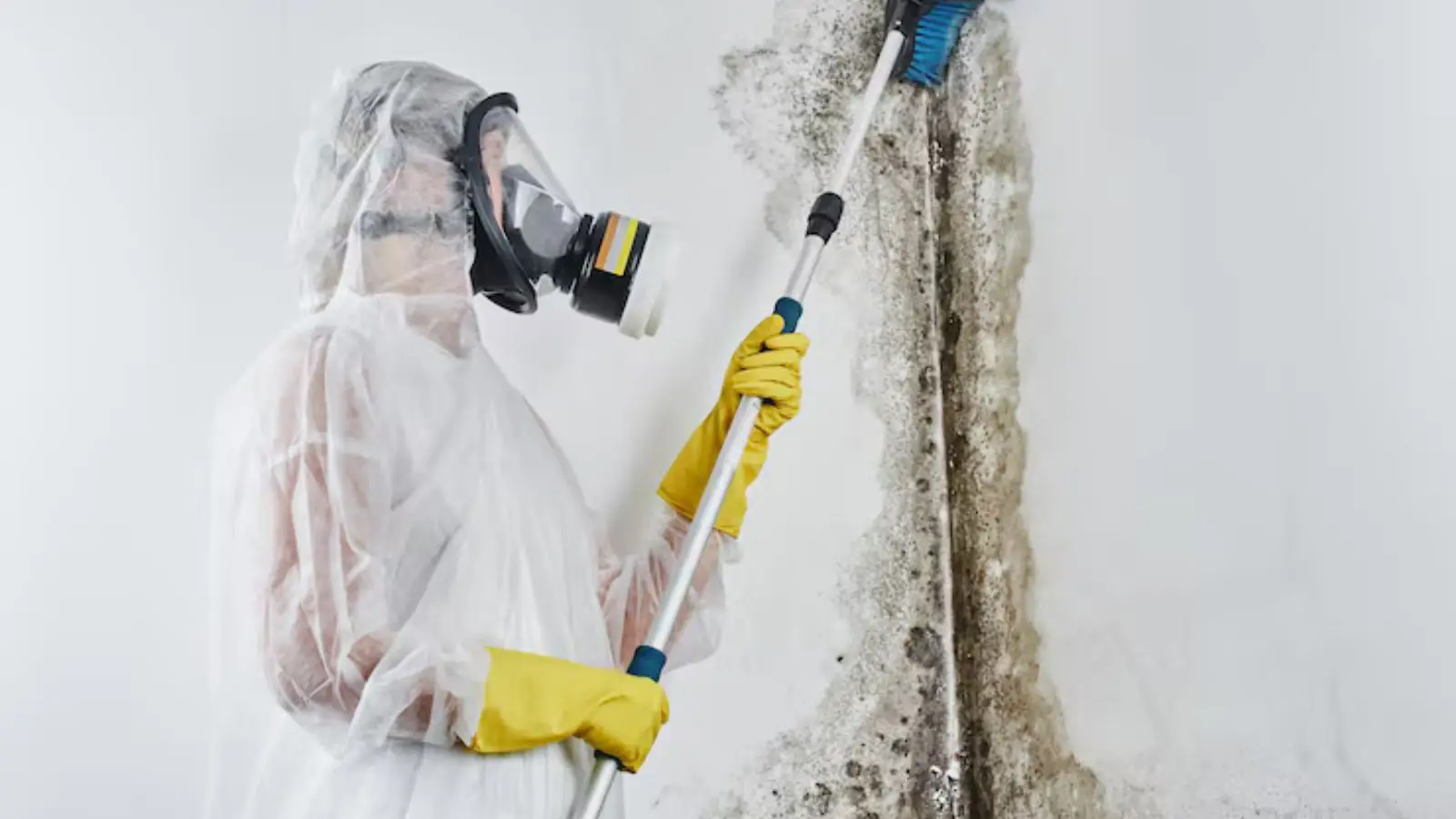
Mold remediation removes mold growth and fixes the moisture that fed it, following ANSI/IICRC S520 practice. In Lake Forest, CA, it usually follows a leak, a roof or window intrusion or a humid bathroom. Call (949) 670-0939 to describe what you see, and keep the room closed so spores are not spread through the house.
Mold needs moisture. A leak that is fixed and dried within 24 to 48 hours often stops growth, according to the EPA. If mold appears, the water source has to be found and stopped before cleaning means anything.
I see spots on my wall or ceiling
Most mold calls begin with a spot. People notice dark patches in a closet corner, a ceiling near a bathroom or a wall behind furniture, and they wonder whether it is mold and whether it is dangerous. Color does not tell you what it is, and health questions belong to a physician.
What you can do is find the moisture. A recent plumbing leak, a roof leak, an AC condensate line or a bathroom fan that does not vent outside usually explains it. Fix the source, then call us to scope the removal. The process below is water mitigation for the moisture and remediation for the growth.
How a mold remediation job is set up
Find the source
Moisture readings locate the leak or humidity problem.
Contain
Plastic barriers and negative air keep spores in the work area.
Remove and clean
Affected porous materials come out and surfaces are cleaned with HEPA vacuums.
Dry and verify
The area is dried and moisture is confirmed before rebuild.
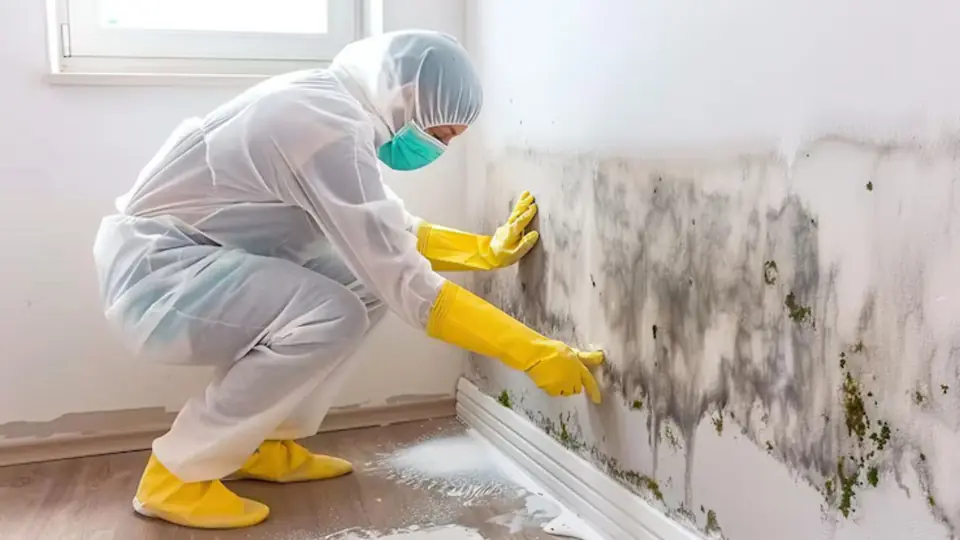
Containment keeps disturbed mold from drifting into clean rooms. Air scrubbers with HEPA filters run during work, and workers wear respirators and protective suits. Porous materials such as drywall and insulation with growth are removed and bagged, while hard surfaces are cleaned.
We do not promise that mold will never return. What we do is fix the conditions that allowed it and confirm the area is dry before anything is closed up.
Mold removal and black mold cleanup
Black mold is a color, not a diagnosis. Many species look dark, and a lab is the only way to name one. California's health department advises against testing visible mold and against using bleach, so the practical decision is whether the area is small enough to clean or large enough to need a professional.
The EPA says that if mold covers less than about 10 square feet, you can in most cases handle it yourself. If it covers more, or if it is inside walls, above ceilings or came with sewage or flood, call a professional.
| Situation | Usually a DIY candidate | Usually call a professional |
|---|---|---|
| Under 10 square feet on hard surface | Yes, with gloves, mask and cleaning | If it returns, find the moisture first |
| Over 10 square feet | No | Yes |
| Inside a wall or above a ceiling | No | Yes |
| After sewage or flooding | No | Yes |
| Musty smell with no visible source | No | Yes, to locate the moisture |

Mold after water damage
Mold after water damage is mostly a timing problem. Wet drywall, insulation and carpet pad that stay damp longer than about a day or two are the likeliest places for growth, and it can hide inside wall cavities for weeks before a smell or stain shows it.
That is why fast emergency water removal and drying prevent most mold calls, and why we recommend checking for hidden moisture when a leak went unnoticed. If mold has formed, remediation removes it and drying finishes the job.
Clearance testing and real estate deals
Some callers need proof that mold is gone, for example because a buyer's lender will not fund a loan until the issue is resolved. Independent clearance testing is done by a third-party assessor so the company that did the work is not grading its own job. We do not perform that testing, and we can coordinate with an assessor you hire.
California has no state license for mold assessors or remediators, so ask any company whether it works to S520, what the written scope covers and who inspects afterward.
What to do and what not to do before we arrive
- ✓Do fix or shut off the water source if you can, and keep the area dry.
- ✓Do keep the room closed and turn off fans that would blow air across the affected area.
- ✓Do not scrub or sand the growth, because that can spread it.
- ✓Do not use bleach, since California public health guidance advises against it.
- ✓Do take photos and note when you first saw it. Call 911 for any electrical or gas concern.
Found mold in your home?
Call (949) 670-0939 to describe the area. We will say what is DIY and what is not.
What sets mold remediation cost
Size of affected area
Biggest driverSquare footage decides containment size and labor hours.
Materials involved
Changes removalDrywall and insulation are removed, hard surfaces are cleaned.
Access and location
Adds setupAttics, crawl spaces and wall cavities take more preparation.
Moisture source
May be outside our scopeA plumber, roofer or HVAC technician fixes the cause.
The California Department of Insurance says mold resulting from a covered peril may be covered, so ask your insurer before cleanup and keep receipts. Mold from long-term neglect is often excluded.
Mold remediation questions
Color alone does not identify mold. A lab can name a species, but California advises against testing visible mold, so the practical step is to find the moisture and decide whether the area is small enough to clean.
The EPA says in most cases yes if it covers less than about 10 square feet. Avoid bleach and keep the room closed. If it returns, find the moisture.
We cannot promise that. We remove growth, fix conditions that allow it where we can and verify dryness before rebuild.
Mold resulting from a covered peril may be covered, according to the California Department of Insurance. Ask your insurer first.
No. Clearance testing should come from a third party. We coordinate with the assessor you choose.