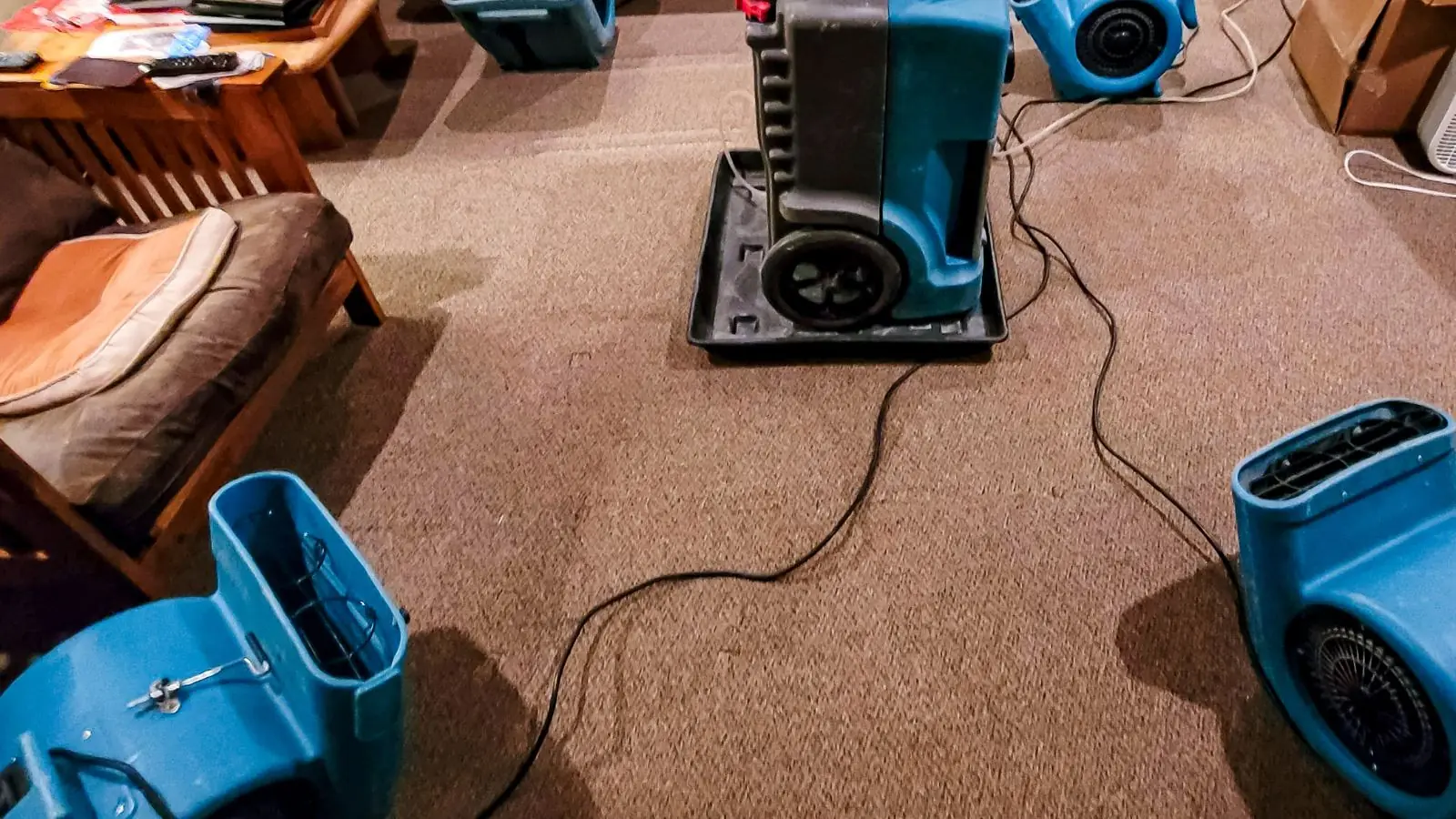
Water mitigation is the work done in the first 24 to 72 hours to stop damage from spreading. In Lake Forest, CA, that means finding where the water went, removing it and setting drying equipment before wet materials start to break down. Call (949) 670-0939 any hour if water is still moving through your home.
The EPA says water-damaged areas and items should be dried within 24 to 48 hours to prevent mold growth. Mitigation is organized around that window, which is why a quick call matters more than a perfect plan.
My wall is wet and I do not know what to do
That sentence describes most mitigation calls. People search for a damp wall, a soft baseboard or a wet ceiling and only later learn the trade term. What you need is someone who can read moisture behind finishes, shut down the source and start controlled drying.
Water mitigation is that process. It combines inspection, partial removal of materials that cannot dry in time, and engineered drying with air movers and dehumidifiers. Once the structure is dry, repair can rebuild it.
When water mitigation is an emergency
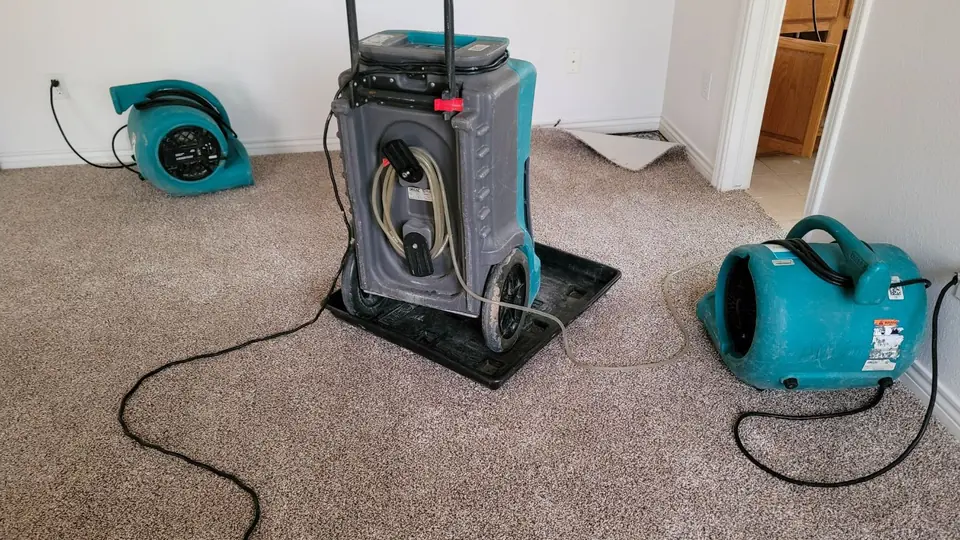
Every hour water sits in carpet pad, insulation or drywall, it spreads and the odds of saving the material drop. Mitigation is an emergency service when water is still flowing, when it has soaked more than one room, or when it contacts sewage or outdoor floodwater.
Our 24/7 line takes mitigation calls after hours and on weekends, and same-day response is offered when crews are available. Tell the dispatcher what you see and what you have already shut off, and you will get next steps in the same call.
Source and safety
The leak is stopped and the crew checks for electrical and slip hazards.
Moisture mapping
Moisture meters and thermal imaging show how far water traveled.
Extraction and removal
Standing water is pulled and unsalvageable materials are removed.
Structural drying
Air movers and dehumidifiers run while readings are logged daily.
Structural drying, explained
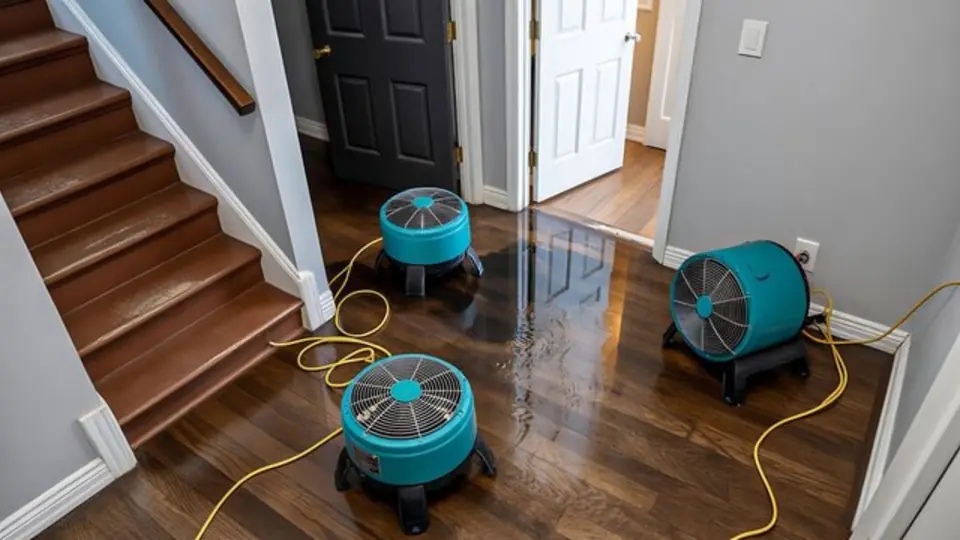
Structural drying is the engineered part of mitigation. Crews place air movers to push air across wet surfaces and dehumidifiers to pull moisture out of the room, and they measure temperature and humidity to confirm the equipment is working.
Low-grain refrigerant dehumidifiers handle most residential jobs, and desiccant units are used in cooler spaces or when deeper drying is needed. Daily readings on the same marked spots show whether materials are trending toward the dry reference, and the equipment stays until they get there. The published industry standard for this work is ANSI/IICRC S500, and homeowners can ask any company whether its crews work to it.
Typical jobs take about three to five days, but that is not a promise. Thick framing, flooring adhesive, insulation and plaster all slow the process, and a house with high indoor humidity takes longer than one with dry air.
| Class | What was wet | Typical drying approach |
|---|---|---|
| Class 1 | Small area, low-porosity materials | A few air movers and a dehumidifier |
| Class 2 | Whole room, carpet and pad, wall wicking | More air movers, wall cavities opened or vented |
| Class 3 | Water from above, ceiling, insulation, walls and floor | Heavy equipment and removal of saturated materials |
| Class 4 | Deep saturation in dense materials | Specialty drying such as desiccant units, longer timelines |
Start drying today
Call (949) 670-0939 and describe the wet areas. A dispatcher will tell you what to move and what to shut off.
What changes the mitigation scope and price
Time since the water started
Earlier saves moreMaterials wet longer than a day or two are more likely to be removed than dried.
Water category
Changes processContaminated water needs removal of porous materials before drying starts.
Square footage and number of rooms
Sets equipment countA larger wet area needs more air movers, dehumidifiers and monitoring visits.
Materials
Changes what driesHardwood, subfloor, plaster and insulation each dry at different speeds.
Insurance policies often cover sudden and accidental water damage and may expect you to take reasonable steps to prevent more damage, which includes mitigation. Check your policy or ask your insurer, and keep daily readings, photos and invoices. Call us for your real number.
Mitigation links to the rest of the job. After bulk water leaves, water damage cleanup handles debris and sanitizing, and neighbors in Aliso Viejo can get the same process through our area crews. If the loss involved outside floodwater, see flood damage restoration.
Water Mitigation questions from Lake Forest homeowners
Yes. The line at (949) 670-0939 is open 24/7, and same-day response is offered when crews are available. Call as soon as you see water, because the first day matters most.
Typical jobs take about three to five days, but the answer depends on materials, water category and humidity. Crews log moisture readings daily and remove equipment when readings reach the dry reference.
Air movers push dry air across wet surfaces and dehumidifiers pull water vapor out of the air. Together they dry walls, floors and framing without tearing everything out.
No. Mitigation stops the damage and dries the structure. Repair rebuilds finishes after the structure is dry.
Usually not, though the equipment is loud and uses power. If the water was contaminated or the dust from demolition is heavy, we will tell you if a room should stay empty.