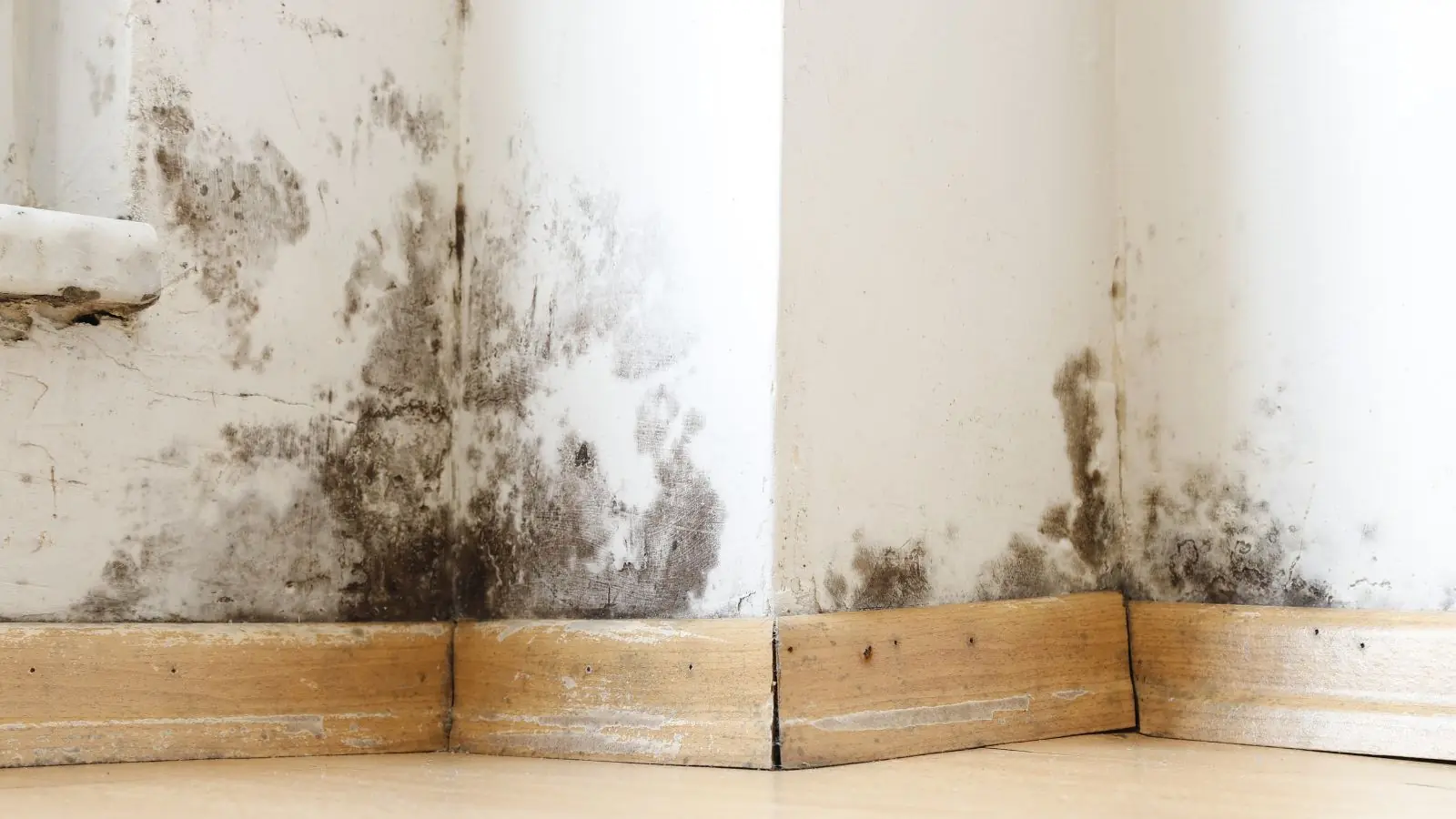
Black mold is the everyday name for any dark, usually black or deep green, mold growth on a surface. If you see it on a wall in your Lake Forest, CA basement or lower level, the name alone says nothing about the exact species or how serious the situation is.
That surprises most people. This page explains what the label means, what the state health department advises, and a calm sequence of actions for dark growth on basement walls.
What people mean by the phrase
Search results and news stories have turned one phrase into a fear label. In a home, the same phrase gets applied to anything dark and fuzzy, from a spotted ceiling corner to a smear behind a water heater. Homeowners reasonably want to know whether theirs is the bad kind.
The honest answer is that eyes cannot tell. Many different molds look black or dark green on drywall, wood and concrete. Only laboratory work identifies species, and even that does not change the cleanup plan, because the response is the same: stop the water and remove the growth.
Why color is a poor guide
Growth changes color with age, food source and moisture. A pale patch can darken over weeks, and a dark patch can look gray under dust. Lighting and the wall surface change the look too, so two photos of one patch can seem like two different problems.
Treat every visible growth the same way: find the moisture, protect yourself, limit dust and remove or clean it according to the material. This page makes no health claims. Questions about how a person feels around mold belong with a physician.
What the state health department tells homeowners
The California Department of Public Health advises against testing visible mold. The reasoning is practical: if you can already see it, a lab report does not change what you need to do. CDPH also advises against using bleach on mold.
Skipping the test saves money for the part that matters, which is fixing the source and doing the cleanup properly. We do not provide mold testing, and you rarely need it to decide on next steps.
| What you see | Common cause | First move |
|---|---|---|
| Dark speckles on painted block wall | Condensation or seepage | Check the wall with a moisture meter |
| Fuzzy black patch on drywall paper | Wet board after a leak | Stop the water and plan on removal |
| Black line along the baseboard | Water wicking up from the floor | Check for a leak, then pull the baseboard |
| Dark growth on stored boxes | High humidity in the room | Bag boxes, run a dehumidifier |
| Dark stain with a musty smell, no fuzz | Hidden moisture in the cavity | Call for meter and camera readings |
A calm sequence when you spot it
Stop the water
Turn off the supply line or appliance if you know the source. If you do not, call a plumber.
Measure and photograph
Measure the patch. EPA says mold under about 10 square feet can in most cases be handled by the homeowner, and photos help with an insurance conversation.
Limit dust
Close the door, tape vents, and do not dry-brush or sand. Moving dust spreads growth to clean areas.
Dry the area
Run a dehumidifier and fans. Porous materials that stay wet for more than a day or two may need to come out.
Decide who cleans
Small and hard surface means careful detergent cleaning. Large, hidden or soaked means a professional.
What not to do
- ✓Do not spray bleach and walk away, because CDPH advises against bleach on mold
- ✓Do not paint over growth, which seals the moisture in and hides the problem
- ✓Do not sand or scrape dry mold, since that puts dust in the air
- ✓Do not run a fan across a mold patch toward the rest of the house
- ✓Do not pay for a test of visible growth just to learn its name
When a basement wall needs a crew
Hand the job off if the growth covers more than about 10 square feet, if drywall or insulation stayed soaked, or if you suspect water behind the wall. Remediation done to ANSI/IICRC S520 practice uses containment, HEPA filtration and moisture readings, and homeowners can ask any company whether it follows S520. Our mold remediation crews work that way.
Flood or sewage involvement changes the job. See flood damage restoration if outside water entered the room. We also send crews to Rancho Santa Margarita and Irvine.
Questions that deserve a professional answer
Bring these to any bid conversation about dark growth.
- ✓What is the scope: removal, cleaning, drying and rebuild, listed separately?
- ✓How will the work zone be contained and filtered?
- ✓What moisture readings will confirm the area is dry?
- ✓Who stops the water source and who rebuilds the wall?
Dark growth on a wall and unsure what it needs?
Call us, describe the size and the surface, and we will help you sort out the next step.
What about cost and insurance
No responsible number comes without seeing the wall. Cost factors are the water category, the affected area, the materials, the days of drying and equipment, and the rebuild scope. Call (949) 670-0939 for your real number.
Sudden and accidental water damage is often covered, and gradual leaks and neglect often are not. Ask your insurer and read your policy. In California, report water damage right away and take reasonable steps to prevent more damage.
Questions homeowners ask
Color cannot tell you the species, so there is no way to say from looks alone. This page makes no health claims. Treat all visible growth as a moisture problem to fix, and take health questions to a physician.
The California Department of Public Health advises against testing visible mold. The result would not change your steps: fix the water, then remove or clean the growth. We do not offer mold testing.
CDPH advises against using bleach on mold. For hard surfaces, detergent and water with careful drying is the common approach. Porous drywall that stayed wet often needs removal, not scrubbing.
EPA says that in most cases, mold under about 10 square feet is a job a homeowner can manage. For anything bigger, hidden or tied to sewage, call a professional.
Treat it as flood damage, which means Category 3 water. Remove people and pets, photograph everything and call a crew. Check whether your policy includes flood coverage, since standard homeowners policies usually exclude it.