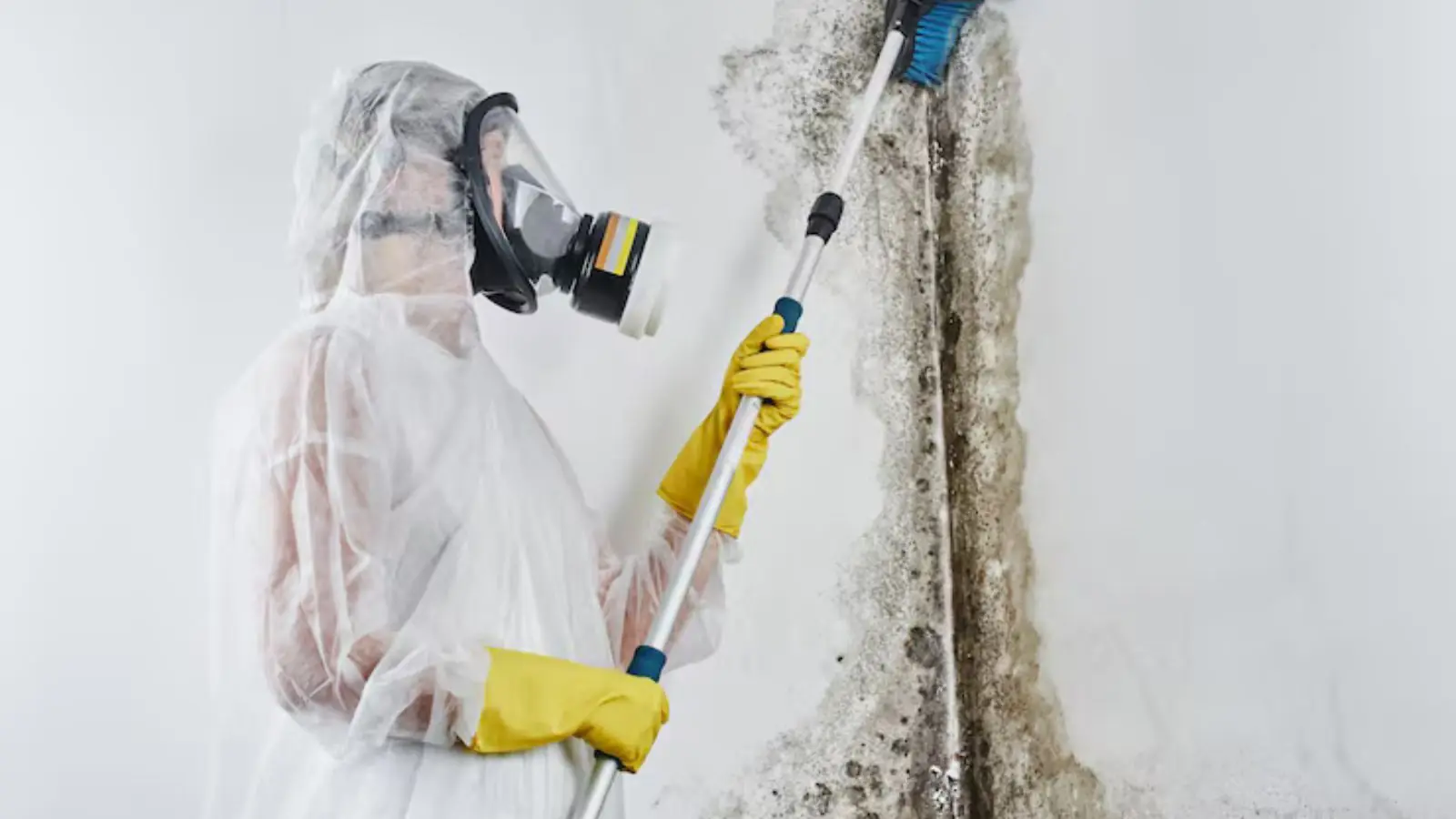
Black mold removal services in Lake Forest, CA are crews that physically take out mold-affected materials, clean what can safely stay, dry the structure, and look for the water source that fed the growth. "Black mold" is everyday shorthand for dark growth on drywall, grout, or framing, and color alone does not tell anyone what is growing. This guide follows a removal job from the first walkthrough to the last moisture reading.
Professional work in this field follows ANSI/IICRC S520, a published standard for mold remediation that any homeowner can ask a company about. The process is controlled. The crew seals off the area, filters the air, removes what cannot be cleaned, and dries everything behind it. Health questions belong to a physician, so this article sticks to the work itself.
Start with the moisture, not the stain
Mold needs moisture, so a removal job begins by asking where the water came from. A technician uses a moisture meter and often a thermal imaging camera to trace damp drywall, subfloor, and framing. Surface stains rarely show how far wet material runs behind them.
A plumber or roofer stops the leak itself, because we do not do plumbing repair or roofing. What our mold remediation crews do is record readings, mark the wet zone, and confirm that the source is dry before removal begins. Pulling out growth beside an active leak just sets up a repeat visit.
How the scope gets set
Scope is the written list of what will be removed, cleaned, dried, and rebuilt. It comes from three things: the mapped area of affected material, the type of material, and how deep the moisture reached. A closet wall with a slow leak behind it produces a very different scope than a ceiling that sat wet under a failed upstairs line.
Ask for the scope in writing with each area named by room and surface. A clear scope usually covers the items below.
- Rooms and surfaces affected, with moisture readings noted for each
- Materials to be removed, such as drywall, baseboard, insulation, or carpet pad
- Surfaces to be cleaned in place, such as framing and concrete
- Containment and air filtration planned for the work area
- Drying equipment and the target readings for sign-off
- What is left for the rebuild phase
Containment and HEPA air filtration
Disturbing mold sends spores into the air, so the crew isolates the work area first. Plastic sheeting and zipper doors seal off the room, and a negative air machine pulls air out through a HEPA filter so the pressure inside stays lower than the rest of the house. That keeps dust moving toward the filter rather than into your hallway.
HEPA air scrubbers then run through the job and often for a period afterward. Crews also wear protective gear and bag debris inside the containment before carrying it out. Ask any company how it plans to seal the area and where the filtered air exhausts.
Why the plastic and the air machine matter
Skipping containment is the most common shortcut on a small job. A quick scrape with no barrier can spread dust to rooms that were clean the day before. Look for these on the day:
- ✓Sheeting taped over doorways and vents in the work area
- ✓A running air machine with a duct to the outside or a filtered exhaust
- ✓Floor protection along the path debris travels
- ✓Sealed bags rather than loose armfuls of drywall
Porous materials come out, hard surfaces get cleaned
Porous materials such as drywall paper, insulation, carpet, and ceiling tile absorb water and hold growth below the surface. When these stay wet, cleaning the top rarely solves the problem, so the standard approach is to cut them out and replace them. The crew usually cuts a clean margin past the visibly affected area, guided by moisture readings.
Non-porous and semi-porous surfaces such as framing, concrete, and tile can often be cleaned in place. Crews typically use HEPA vacuuming and damp wiping, and sanding or wire brushing on framing when needed. Bleach is not the answer on porous surfaces, and a company that proposes painting over stained drywall is skipping the real work.
Drying comes before any rebuild
After removal, the structure still holds water. Air movers and LGR or desiccant dehumidifiers pull moisture out of framing and subfloor, and technicians log readings daily. Drying typically takes about 3 to 5 days, but that varies with materials and conditions, and it is not a promise.
The goal is a reading that matches a dry reference taken from unaffected materials in the same house. Once those numbers match, rebuilding can begin. Our water mitigation work uses the same equipment and logs for structural drying after a leak.
| Job stage | What happens | What you should see |
|---|---|---|
| Walkthrough | Moisture mapping with meter and thermal camera | Readings noted by room and surface |
| Set-up | Containment, floor protection, HEPA machines | Sealed doorways and a humming air machine |
| Removal | Wet porous materials cut out and bagged | Open wall cavities and sealed debris bags |
| Cleaning | HEPA vacuum and damp wipe on remaining surfaces | Framing exposed and visibly clean |
| Drying | Air movers and dehumidifiers run for days | Daily readings dropping toward the dry reference |
| Final check | Moisture re-checked, source confirmed dry | Written readings before rebuild starts |
What to expect on the day
Most removal jobs are loud and a little disruptive. Expect plastic across doorways, a machine running most of the day, and crews walking a set path in and out. Pets and children should stay away from the work area, and your thermostat may be adjusted to keep air moving through filters.
Small jobs can wrap up in a day, while larger ones stretch across several days because of drying. A good crew walks you through the work area before leaving and tells you what happens next. They also tell you which rooms are safe to use in the meantime.
Dark patches on a wall and a damp smell?
Call for a crew to map the moisture and set a written scope for your home.
What removal does not include
Removal is one piece of the job. We do not do plumbing repair, roofing, or waterproofing, and we do not offer mold testing. A plumber fixes the pipe, and any sampling questions belong with a separate party that has no stake in the removal.
Where wall sections come out, rebuilding is usually a separate line item in the scope. Our water damage repair crews replace drywall, insulation, and trim after the readings pass. We also work in Laguna Hills, and the two phases are written as separate lines wherever the home is.
Mold comes back to moisture
Nobody can promise that mold will stay away, because it depends on whether moisture returns. The only honest assurance is a documented dry structure and a fixed source. Keep humidity in check, watch for new stains, and call quickly if a pipe or roof leaks again.
Questions homeowners ask
Small, contained areas can be finished in a day. Larger jobs usually take several days because removal is followed by drying, which typically runs about 3 to 5 days depending on materials and conditions. Your written scope should show the phases and their estimated order.
EPA guidance says small areas under about 10 square feet can in most cases be handled by a homeowner. Larger areas, hidden growth, or anything tied to sewage or contaminated water should go to a professional. If you are unsure of the size, call (949) 670-0939 and a crew can look at it.
No. Painting over stains hides the problem without removing wet material. If drywall stayed wet long enough to grow mold, the affected section is cut out, the cavity is dried and cleaned, and new board goes in after readings are acceptable.
HEPA filters capture very fine particles from the air that passes through them. In mold work, a HEPA air scrubber or negative air machine runs inside the sealed work area so disturbed dust is trapped rather than spread. HEPA vacuums are also used on surfaces that stay.
Permit rules vary by job, so ask the city building department before work starts. For the contractor, California law requires a CSLB license for building work of $500 or more, while mold remediation itself has no state license. Ask for the license number of whoever rebuilds and verify it with the board.