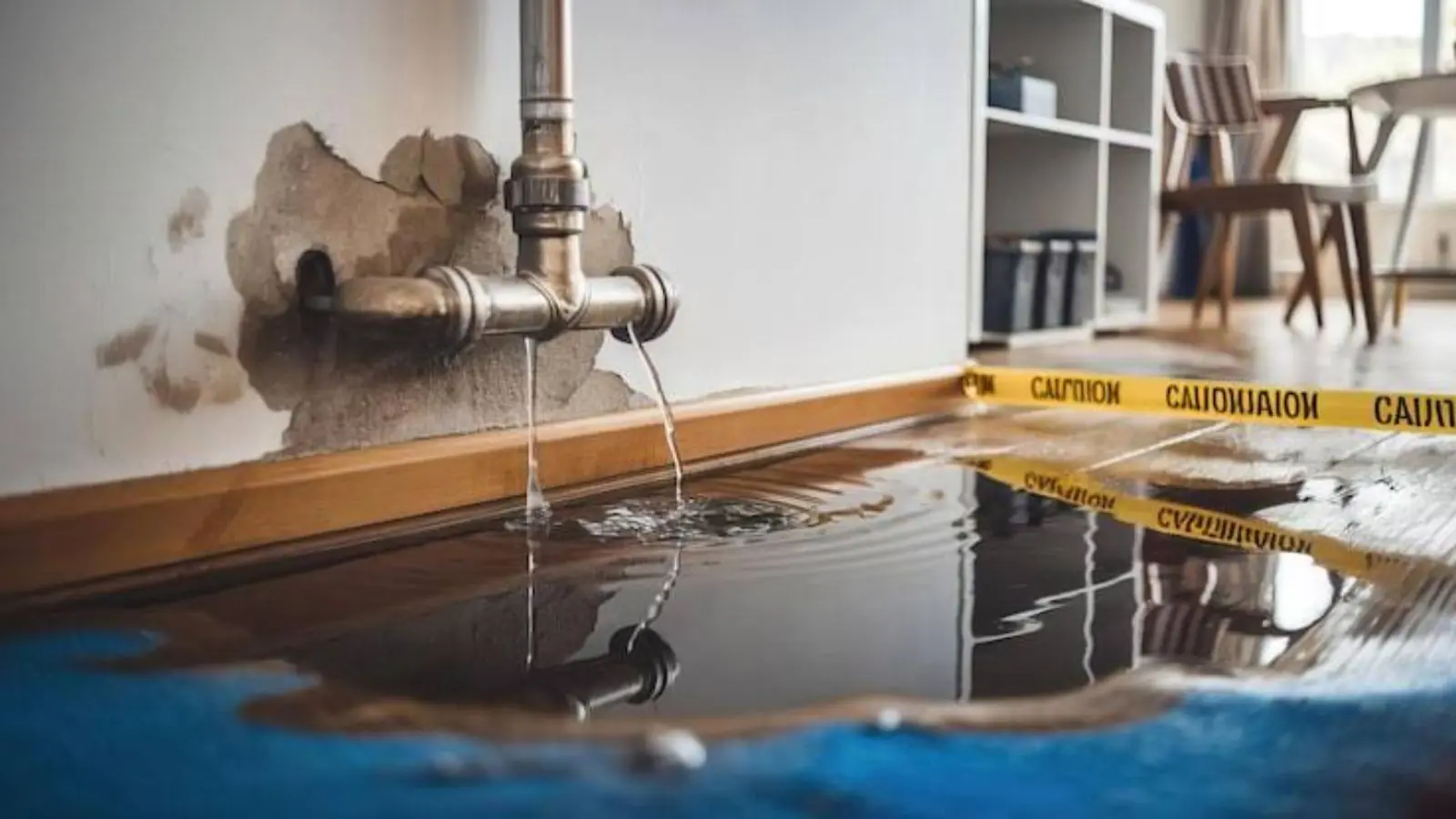
A burst pipe in Lake Forest, CA is a plumbing failure that releases pressurized water into a wall, ceiling or floor, often faster than people expect. A split supply line can soak drywall and flooring across several rooms before anyone finds the source.
What you do in the first 30 minutes matters more than anything else you do afterward. Stop the water, make the house safe, protect what you can, and then call for help.
Know your main shutoff
Find it before an emergency. It is usually near where the supply enters the home, at the garage wall or the side of the house.
Keep a flashlight handy
If power is off or you need to look in a dark garage or closet, a light keeps both hands free.
Save the phone number
Keep (949) 670-0939 in your phone so you can call the moment the water is off.
The first 30 minutes, in order
Shut off the main water
Turn the main valve clockwise until it stops. If it is a lever, turn it a quarter turn across the pipe.
Think about power
If water is near outlets, appliances or the panel, do not stand in it. Shut off power only if the panel is dry and you can reach it safely.
Open a faucet low in the house
Running a tap drains remaining water from the line and relieves pressure.
Lift what you can
Move electronics, papers, small rugs and furniture legs onto dry surfaces.
Take photos and call
Photograph the source and wet areas, then call a plumber for the pipe and a restoration crew for the water.
If you cannot reach or turn the main valve, do not force it past what feels safe. A stuck or broken valve is a plumbing problem. Call your water utility and ask what help it offers, and call a plumber at the same time.
Every minute counts, but electricity and standing water do not mix, so safety goes first.
Power and water: a rule worth remembering
Water that reaches outlets, cords or the electrical panel can create a shock hazard. If the floor around the panel is wet, stay out and call an electrician or the utility. Never wade through standing water to flip a breaker.
Ceiling leaks add a different risk. Water pooling above a light fixture can drip through the fitting. Leave the light off and keep people away until a professional checks it.
Safe things to do while you wait
These steps are within reach for most homeowners:
- ✓Lift valuables, shoes and bags off wet floors
- ✓Put aluminum foil or wood blocks under furniture legs on wet carpet
- ✓Pull up small rugs and hang them to dry
- ✓Open cabinet doors under sinks to let air in
- ✓Keep children and pets out of the wet area
Plumber first, or restoration first?
You need both, and the order is simple. A plumber stops the leak and repairs the pipe. We do not do plumbing repair. A restoration crew removes the water and dries the structure so the damage does not keep growing.
If you can shut off the main, call the restoration crew right away without waiting for the plumber. Water extraction and drying should start while the repair is arranged.
| Task | Who does it | Why it matters |
|---|---|---|
| Stop the supply | You, or the utility if your valve fails | No drying works while water flows |
| Repair the pipe | Licensed plumber | Fixes the cause of the leak |
| Extract standing water | Restoration crew | Removes bulk water fast |
| Dry the structure | Restoration crew | Prevents swelling and mold growth |
| File the claim | You and your insurer | Starts the paperwork early |
What restoration does after the pipe is off
Truck-mounted or portable extraction units pull standing water from floors and carpet. Crews then use moisture meters and thermal imaging cameras to find water inside walls and under flooring that you cannot see.
Wet drywall, insulation and carpet pad are removed if they cannot dry in place. Air movers and LGR dehumidifiers then run for about 3 to 5 days in a typical job, with daily readings. That is typical, not a promise.
Clean supply water is Category 1 under S500, but it can become Category 2 if it sits and picks up contamination from materials. That is another reason to move fast. Our emergency water removal team begins with extraction, and the water damage cleanup work follows.
The EPA says to dry water-damaged areas within 24 to 48 hours to prevent mold growth.
Water still spreading?
Call (949) 670-0939 now and a crew can be dispatched, 24/7.
Insurance: your duty to limit the damage
The California Department of Insurance says policyholders must take reasonable steps to prevent further damage, keep receipts, and report water damage right away. Shutting off the water, extracting it, and drying the home are all reasonable steps.
Keep every receipt for emergency work, equipment, and temporary repairs. Photos taken before cleanup help show what happened. Sudden and accidental pipe bursts are often covered, but check your policy and ask your insurer.
CDI also advises getting written bids from licensed contractors. Insurers must acknowledge a claim within 15 calendar days and decide within 40 calendar days after proof of claim.
We cannot say what any insurer will approve or pay. We can document the work and the drying readings so you have records.
We also send crews to Rancho Santa Margarita and Laguna Hills, so if you are nearby the same checklist applies.
- ✓Main valve closed and faucet opened low in the house
- ✓Power risk checked, panel dry before touching
- ✓Photos of the source, walls, ceilings and floors
- ✓Valuables lifted and electronics moved
- ✓Plumber and restoration crew both called
Questions homeowners ask
It is usually where the supply line enters the house, often on a garage wall, near the water heater, or in a side yard box. Find it now so you are not searching during a leak.
Only if the panel is dry and you can reach it without stepping in water. If the panel area is wet, stay out and call an electrician or the utility.
Yes, have the pipe checked. A pipe that burst once can fail again, and the cause, such as pressure or a worn fitting, needs a plumber's diagnosis.
Shut off the main and call. Moisture meters and thermal cameras find water behind drywall, and small access cuts may be needed for drying.
Check your water bill. Most of the city is IRWD, the southeast corner is ETWD, and a small northern area is Trabuco Canyon Water District. Ask that utility what help it offers, and call a plumber too.