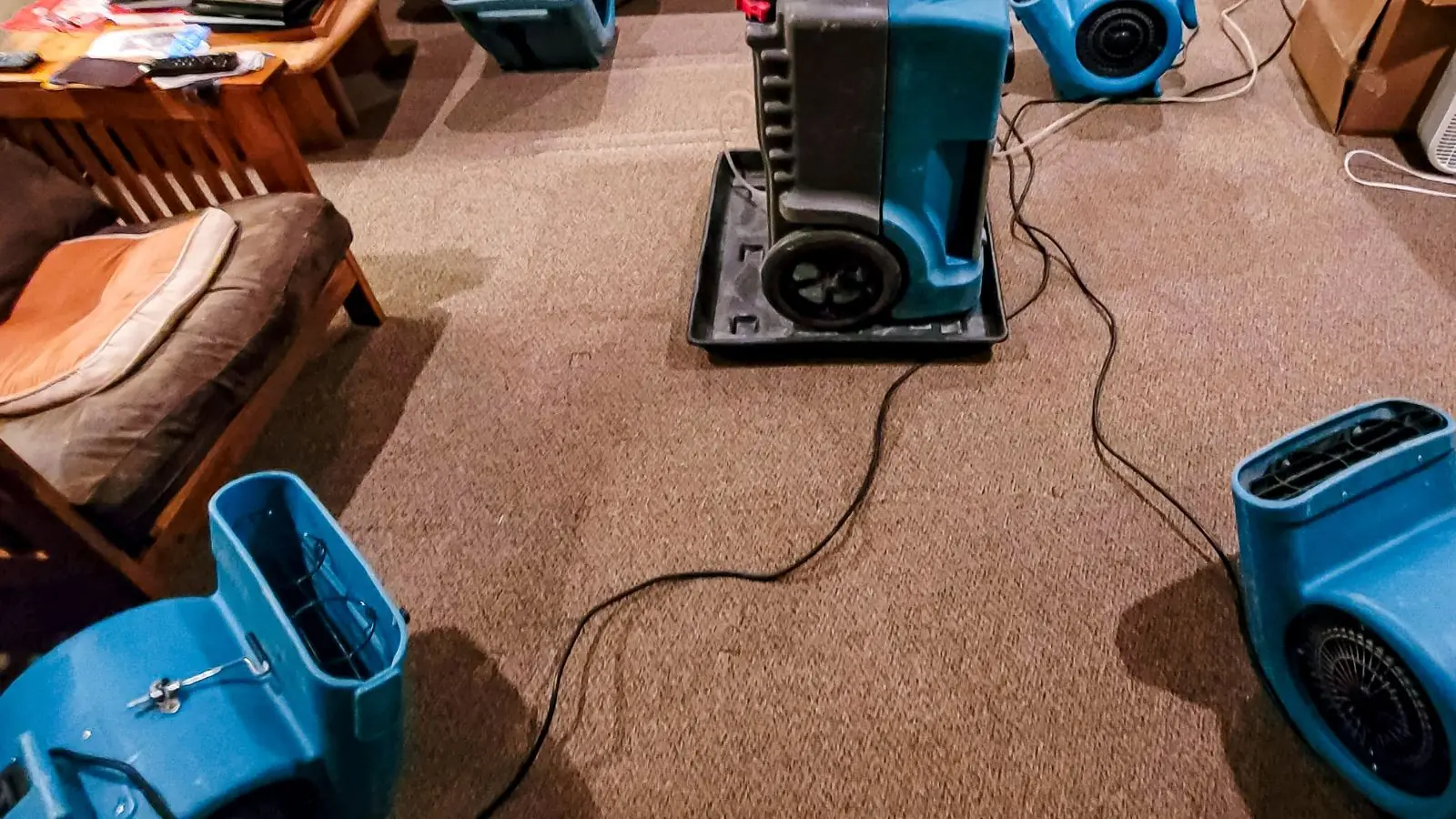
Structural drying is the process of removing water from building materials and indoor air until readings match a dry reference. In Lake Forest, CA, a typical job takes about 3 to 5 days of equipment time. That is typical, not a promise, because the real number depends on what got wet and how long it stayed that way.
People ask this question first because they want to know when the noise stops and life returns to normal. This post walks through the clock, the equipment, and the factors that push a job longer.
The first 48 hours matter most
The EPA says it is important to dry water-damaged areas and items within 24 to 48 hours to prevent mold growth. That window is the reason crews push for fast response. Every hour water sits in drywall, carpet pad or wood, the job gets bigger.
Extraction comes first. Truck-mounted or portable units pull standing water off floors, which removes the bulk before drying begins. Drying equipment cannot do that job efficiently.
After extraction, the crew sets up for evaporation. Air movers push air across wet surfaces, and dehumidifiers pull the moisture out of the air so it does not settle on the next wall. Both parts have to work together or the room just trades dampness around.
Our emergency water removal service starts this process, and our drying work picks it up from there.
What the equipment actually does
- Moisture meters give a number for drywall, wood and subfloor so progress is measured
- Thermal imaging cameras show cool, wet areas behind surfaces without opening them
- Air movers speed evaporation by pushing air across the surface
- LGR dehumidifiers pull moisture from air at typical indoor conditions
- Desiccant dehumidifiers work in cooler, drier air or on stubborn materials
- HEPA air scrubbers clean the air when materials are being removed
None of this is guesswork. Equipment counts and placement follow the size of the affected area and the drying class, which runs from 1 to 4. Class 1 is a small area with low-absorbing materials. Class 4 covers deep saturation in dense materials like hardwood or plaster.
The water category matters too. Category 1 is clean supply water, Category 2 carries significant contamination, and Category 3 is grossly contaminated, such as sewage or rising floodwater.
| Material | Why it dries that way | What crews do |
|---|---|---|
| Drywall | Absorbs quickly, dries in days if clean water | Dry in place or cut flood cuts if saturated |
| Carpet and pad | Pad holds water like a sponge | Often remove pad, dry carpet if clean |
| Hardwood | Dense, absorbs slowly and releases slowly | Mats and low-heat drying, longer timeline |
| Concrete slab | Holds moisture for a long time | Dehumidify, monitor readings, extend run time |
| Framing lumber | Dry reference is easy to compare | Air movers and dehumidifiers, check readings |
Daily readings: how progress is tracked
Each visit, the crew records moisture readings at marked spots on affected materials and compares them to a dry reference from unaffected material in the home. That is the heart of S500 practice. Equipment gets moved, added or removed depending on the numbers.
You may notice the crew pulling equipment out of one room while another stays on. That is a good sign. It means some areas have reached their goal.
What you can expect day by day
A typical sequence for a clean-water job looks like this:
- ✓Day 1: extraction, removal of materials that cannot dry, and equipment setup
- ✓Day 2 and 3: steady drying with readings logged at each visit
- ✓Day 4 and 5: equipment reduced as areas hit their goals, final readings taken
- ✓Anything beyond that usually involves thick materials, higher categories or a larger area
What makes drying take longer
Materials are the biggest factor. Plaster, thick hardwood, concrete slabs and stacked layers dry far slower than drywall and carpet. Insulation in a wall cavity can hold water that surface readings do not show, so cavities sometimes need to be opened.
Water category changes the plan. Porous materials touched by Category 2 or 3 water are usually removed, not dried, which changes the timeline and adds a cleaning step.
Time before the call also matters. A leak found within hours dries much faster than one that sat for several days. And a wet area that has already grown mold needs a different plan, which falls under mold remediation practice and ANSI/IICRC S520.
Indoor humidity matters as well. High humidity slows evaporation and makes dehumidifiers work harder. That is why crews watch the air as well as the walls.
Not sure how wet it is?
Call (949) 670-0939 for a moisture check. Crews are dispatched 24/7.
How you know the job is finished
A job is finished when the moisture readings in affected materials reach the dry reference and stay there, not when the wall feels dry to the touch. The crew documents final readings, and equipment goes out only after that.
If a reading bounces back after equipment is removed, that signals moisture still moving from deeper layers. Good crews watch for that and may come back to run equipment again.
Stop the water
A plumber or you closes the valve and the source is fixed.
Extract standing water
Portable or truck-mounted units remove bulk water first.
Set up drying
Air movers and dehumidifiers go in based on the area and class.
Log daily readings
Meters track progress against the dry reference.
Confirm dry goals
Equipment is removed once readings hold at the reference level.
Our structural drying work follows these steps on every job. We also cover neighbors in Aliso Viejo and Irvine, where homeowners ask the same timing questions.
Questions homeowners ask
Touch is not a reliable test. Moisture can sit inside drywall, insulation and framing while the surface feels fine. Crews keep equipment running until meter readings match the dry reference.
No. It is a typical range for many jobs, not a promise. Dense materials, higher water categories, large areas and delayed calls can all add days.
Fans alone move air but do not remove moisture from it, so humidity can rise and spread dampness. Dehumidifiers matched to the area are what make air movers work.
Mold needs moisture, so drying removes what it feeds on. If growth is found, the crew follows S520 practice for containment and cleanup. Health questions belong to a physician.
Rainfall normals from the nearest airport station show a dry summer and a wetter winter, but rainfall is not indoor humidity. Ask your crew for daily indoor humidity readings and let those guide the timeline.