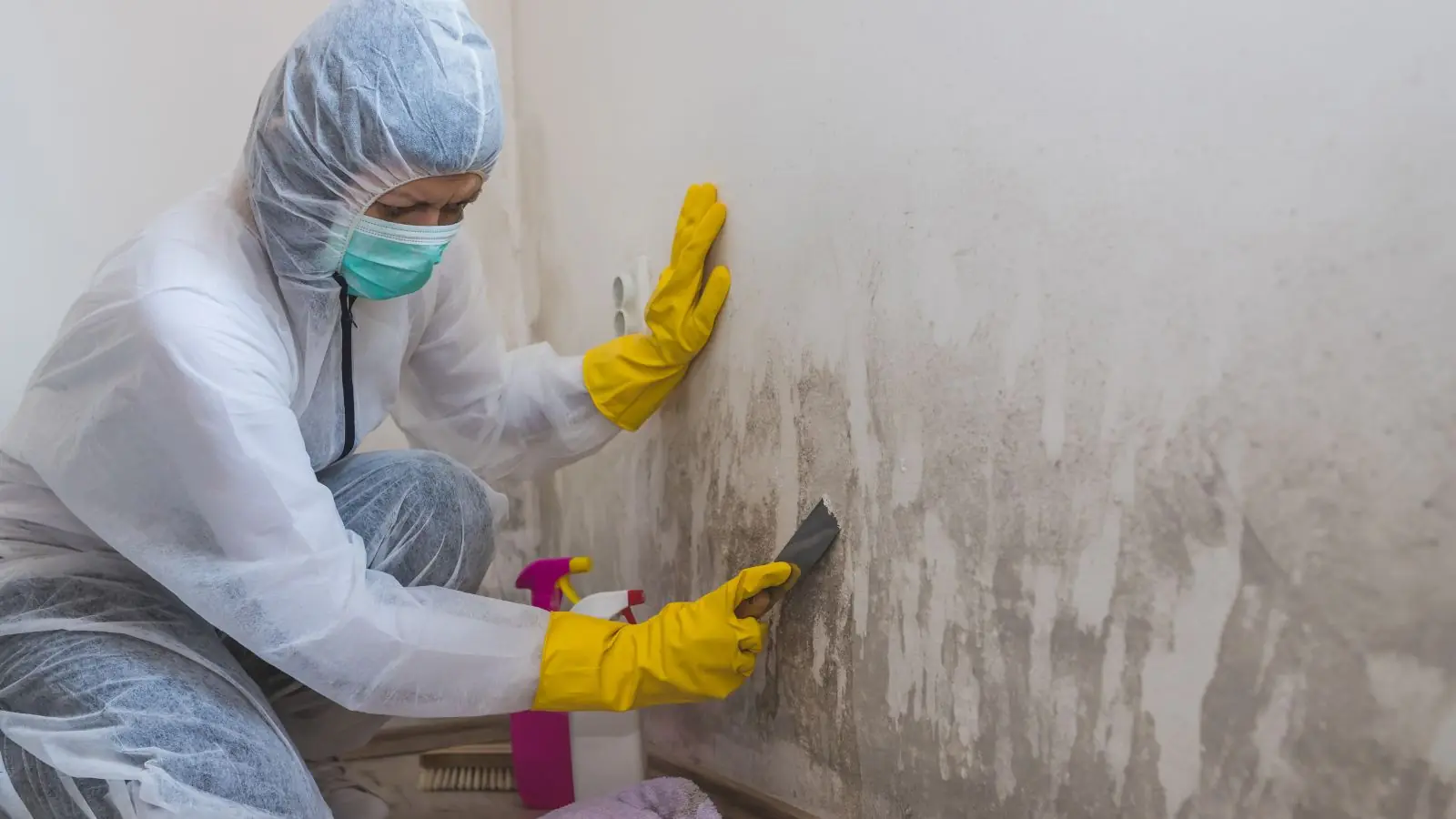
To get rid of mold in a basement, you stop the water first, dry the room, remove materials that cannot be cleaned and scrub the ones that can. If your Lake Forest, CA home has a basement or lower level, this order matters more than any cleaning product.
The plan below is for a small area only. It also doubles as an answer to how to clean up mold in a basement without making the problem bigger. Each step ends with a clear point where you should stop and call instead.
Before you touch anything
Measure the patch with a tape. EPA says that if mold covers less than about 10 square feet, you can in most cases handle it yourself. Past that size, the job belongs with a professional.
Gather gloves, eye protection, a respirator rated for fine dust, a HEPA vacuum, a stiff brush, detergent, buckets and heavy trash bags. Keep children and pets out of the room. Close the door and seal any vents with tape so dust stays put.
Step one: find and fix the water
Check the usual suspects: supply lines, the water heater, the washing machine hoses, window wells, and the line where the wall meets the slab. A moisture meter helps, but a dry paper towel taped to a suspect wall overnight is a rough check too. If the towel is damp in the morning, water is still arriving.
A plumber stops a leak, and we do not do plumbing repair or waterproofing. Cleaning before the source is fixed only buys you a few weeks. Our mold remediation crews step in once the water has stopped.
Step two: dry everything within 24 to 48 hours
EPA puts it plainly: dry water-damaged areas and items within 24 to 48 hours to prevent mold growth. Move boxes and furniture off the wet floor, run a dehumidifier, point fans at the walls and open a window if the air outside is drier than the air inside.
Surface dry is not wall dry. Drywall can feel fine while the cavity behind it stays wet. When water came from a burst pipe or an appliance, a crew with air movers and a moisture meter is faster and more certain. See our emergency water removal service for active water.
Step three: decide what stays and what goes
The California Department of Public Health says porous materials that stay wet more than a day or two may need to be removed. Hard, sealed materials can usually be cleaned. When in doubt, a wet porous item that has visible growth should go in a bag.
| Material | Keep or remove | Why |
|---|---|---|
| Sealed concrete or tile | Keep, clean | Hard and nonporous, so growth stays on the surface |
| Painted wood framing | Keep, clean | Solid wood can be brushed, vacuumed and dried |
| Wet drywall or paneling | Remove | Porous, and growth reaches the paper and the cavity |
| Carpet and pad | Remove | Pad soaks up water and cannot be fully dried in place |
| Fiberglass insulation | Remove if wet | Holds moisture against the framing |
| Cardboard boxes and books | Remove | Paper feeds growth and rarely recovers |
Step four: clean the hard surfaces without spreading dust
- Bag removed materials in the room before carrying them out, and double-bag anything crumbly.
- Vacuum the surface with a HEPA vacuum first, because dry brushing sends dust into the air.
- Scrub with detergent and water, working top to bottom, and change the rinse water often.
- Wipe with clean damp rags, then dry the surface with a fan.
- Vacuum again once everything is dry, and put the rags in a bag.
The state health department advises against using bleach on mold, so plain detergent and water is the safer default. Do not mix cleaning products in a closed room.
Dry is the cleaning step people skip
A scrubbed wall that stays damp will grow again. Leave the fan and dehumidifier running until a moisture meter reading matches a dry wall in the same room, not until the paint looks right.
Step five: keep humidity from creeping back up
- ✓Keep a hygrometer on a shelf and watch for readings that climb after rain or laundry
- ✓Run a dehumidifier when the numbers climb, and empty the bucket or use a drain hose
- ✓Raise stored items off the floor on plastic shelving
- ✓Keep gutters, downspouts and soil grading directing water away from the foundation
- ✓Check window wells and floor drains before each rainy season
Neighbors in Laguna Hills and Aliso Viejo deal with the same cycle of wet months and dry months, so a routine check helps no matter where in the area you live. Nothing here can promise mold will not return, because mold needs moisture and any new water source restarts the clock.
Past the point of a bucket and a brush?
Call and describe the room. We will tell you what we would do and what to expect.
Stop and call a professional when
The numbers or the situation say this is no longer a small job.
- ✓The patch is larger than about 10 square feet or keeps spreading
- ✓Sewage, a backup or floodwater touched the area
- ✓You smell mold but cannot find it, which can mean hidden growth
- ✓Wet insulation or drywall covers a large wall
- ✓The same wall grows mold again after you cleaned it
For hidden mold, EPA suggests considering an experienced professional. For sewage or other contaminated water, it says to call a professional experienced with contaminated water. Questions about symptoms belong with a physician.
Questions homeowners ask
Find out where the water is coming from and stop it. Then measure the patch. Under about 10 square feet, a homeowner can often handle it. Over that, call a professional before you disturb it.
No. A dehumidifier removes moisture from the air, which stops new growth and helps materials dry, but it does not clean existing mold off a surface. The surface still needs removal or scrubbing.
The California Department of Public Health advises against it. Detergent and water, followed by thorough drying, is the usual advice for hard surfaces. Never combine bleach with other cleaners.
If it stayed wet more than a day or two or shows growth on the surface, plan to remove it. Drywall is porous, and paper facing holds moisture. A moisture meter reading against a dry wall helps you decide.
Yes. NOAA normals from the nearest airport station show the rainy stretch running about November through March. Check the base of walls and window wells after each storm, and start drying within 24 to 48 hours if anything is damp.