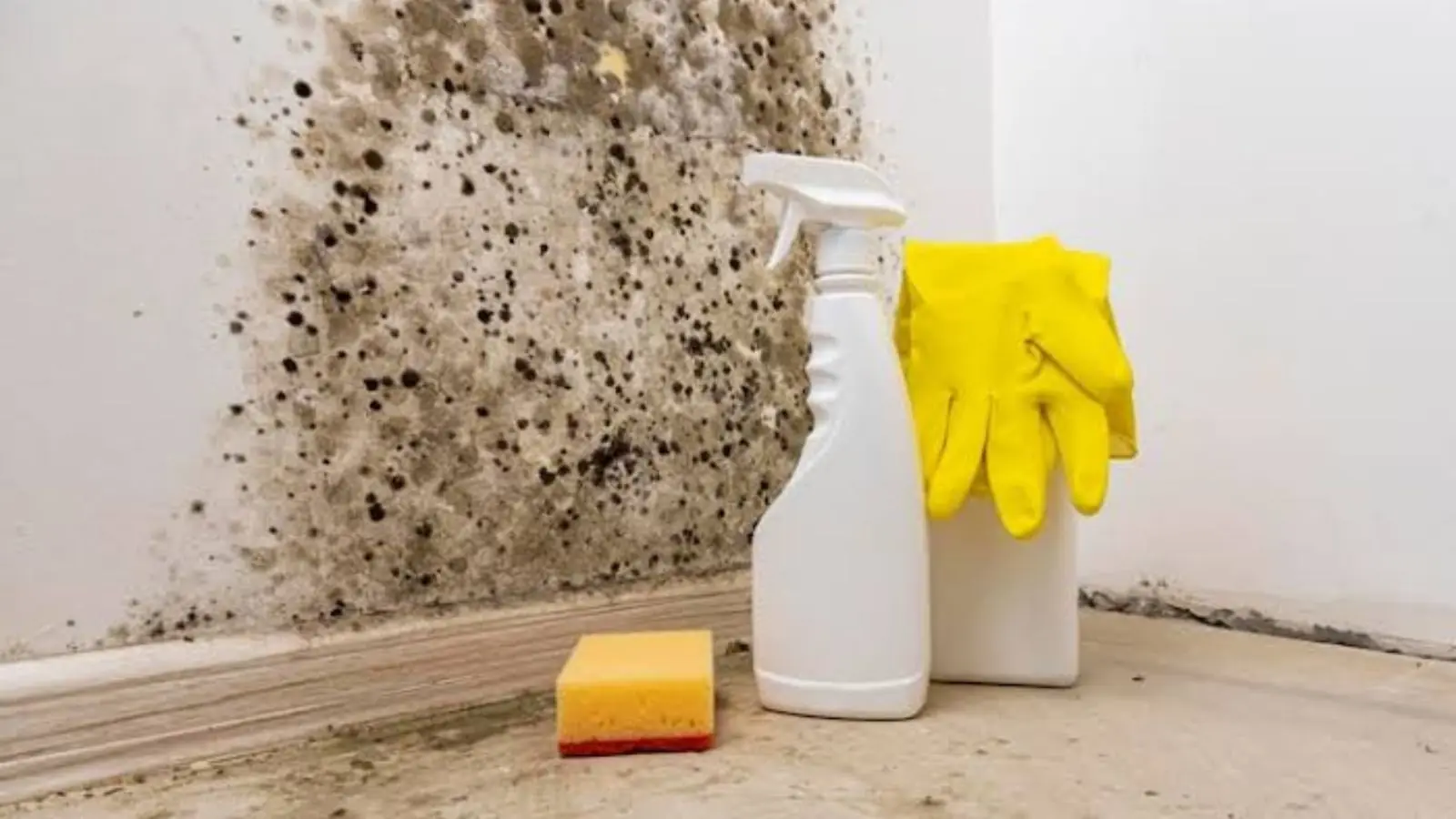
Mold on walls is surface or cavity growth on interior drywall, plaster or paint that appears when moisture stays in the material long enough. In a Lake Forest, CA home, the stain you see is usually the end of a trail that starts somewhere else.
Wiping the spot is the easy part. The useful work is figuring out where the water comes from, because a clean wall with a live moisture source will grow mold again. Here is how to read the signs.
Reading the wall before you clean it
Look at the pattern, not just the spot. A stain that follows a pipe path suggests a plumbing leak. A ring around a window points to the exterior envelope. A patch that sits high in a bathroom corner often means steam with no good exit.
The table pairs common wall symptoms with their likely source and the first sensible move. It is a starting guide, not a diagnosis, and a moisture meter reading beats any guess.
| Wall symptom | Likely source | First step |
|---|---|---|
| Stain that follows a vertical line | Supply or drain line in the wall | Watch the water meter with fixtures off |
| Ring or streak below a window | Window seal or flashing intrusion | Inspect the exterior caulk and frame |
| Bubbling paint on an exterior wall | Stucco crack letting in rain | Look outside for hairline cracks |
| Dark patch high in a bathroom | Steam with weak ventilation | Check the exhaust fan airflow |
| Wet spot near a closet or hallway | AC condensate line or drain pan | Check the drain line and pan |
| Musty smell and no visible stain | Hidden wet cavity | Call for meter and camera readings |
A plumbing leak inside the wall cavity
Pinhole leaks in supply lines, a loose drain connection and a slow shower valve can drip inside a wall for weeks. The drywall wicks the water upward, so the stain may sit well above the actual leak. Warm spots and a rising water bill are other clues.
A simple test: turn off every fixture and appliance and watch the water meter. If the dial still moves, water is escaping somewhere. A plumber finds and repairs the line. We handle the wet drywall, drying and water damage repair after that.
Rain getting in through windows and stucco
Water enters where different materials meet. Window frames, sill corners, hairline stucco cracks and failed caulk all let rain track inside the wall. The interior stain often appears after a storm and fades as the wall dries, which makes it easy to dismiss.
Walk the outside of the wall after rain and look for staining, cracking or gaps. Sealing the exterior is a job for a roofer, stucco or window contractor, not for us. Once it is sealed, drying out the inside cavity keeps the damage from lingering.
Steam and condensation: bathrooms and air conditioning
A bathroom fan that is weak, clogged or vented into the attic leaves steam to settle on walls and ceilings. Watch the fan with a tissue: it should hold firmly against the grille. Run it after showers for as long as the room stays foggy.
Air conditioning adds another route. The condensate line and drain pan carry water away from the coil, and when they clog, water backs up and soaks the wall or ceiling near the unit. If the stain sits near a closet air handler, check the pan first.
How to trace the source
- Press a moisture meter along the wall in a grid, starting well outside the stain.
- Sweep a thermal imaging camera across the surface to spot cool, wet zones.
- Check the room above and the exterior wall behind the stain.
- Run the shower, the sink and the AC one at a time and watch for changes.
- Open a small inspection hole only after you know where to look.
A clean wall is not a fixed wall
If you paint over the stain before the moisture is gone, the paint will bubble and the growth will return.
- ✓Dry the cavity until readings match a dry wall in the same room
- ✓Fix the source first and clean second
- ✓Replace damp insulation and soft drywall
Drywall versus a painted surface
A thin film on a sealed, painted surface can often be cleaned with detergent and water, then dried. Drywall is different. Its paper face and gypsum core absorb water, so mold can sit inside the board and behind the paint. The California Department of Public Health says porous materials that stay wet more than a day or two may need to be removed.
A good rule: if the board is soft, swollen, stained through or has a musty smell, plan on cutting it out. EPA says growth under about 10 square feet is often a homeowner job. Anything bigger, or anything hidden in a cavity, calls for mold remediation done to ANSI/IICRC S520 practice.
Seeing a stain you cannot explain?
Call us. We read moisture, not guesses, and we will tell you what we find.
When to bring in a crew
Call if the wall is soft, the patch is bigger than a dinner plate, water is still arriving, or the smell has no visible source. Our crews also work in Mission Viejo and Aliso Viejo, and the process is the same: find the wet material, dry it and remove what cannot be saved.
Cost depends on the water category, the area affected, the materials, the days of drying and equipment, and the rebuild scope. Call (949) 670-0939 for your real number. Check your policy, since sudden leaks are often treated differently from slow ones.
Questions homeowners ask
Almost always because the moisture source was never fixed or the cavity was not dried. Mold needs moisture, so cleaning the surface does not help while water is still arriving behind it.
No. Paint seals in moisture and hides the problem, and it will often peel or bubble. Fix the source, dry the wall and remove or clean the growth first.
Turn off all fixtures and watch your water meter. If the dial moves, water is escaping. A stain that follows a pipe path or a warm spot on the wall are other clues. A plumber confirms and repairs it.
Yes. A fan that is weak or vented into the attic leaves steam on walls and ceilings. Hold a tissue against the grille: it should pull firmly. Run the fan until the mirror clears.
Yes. Foothill Ranch and Portola Hills joined the city in 2000, and homes across the city come from different eras. Tell the contractor when your house was built, since it affects pipes, windows and wall materials.