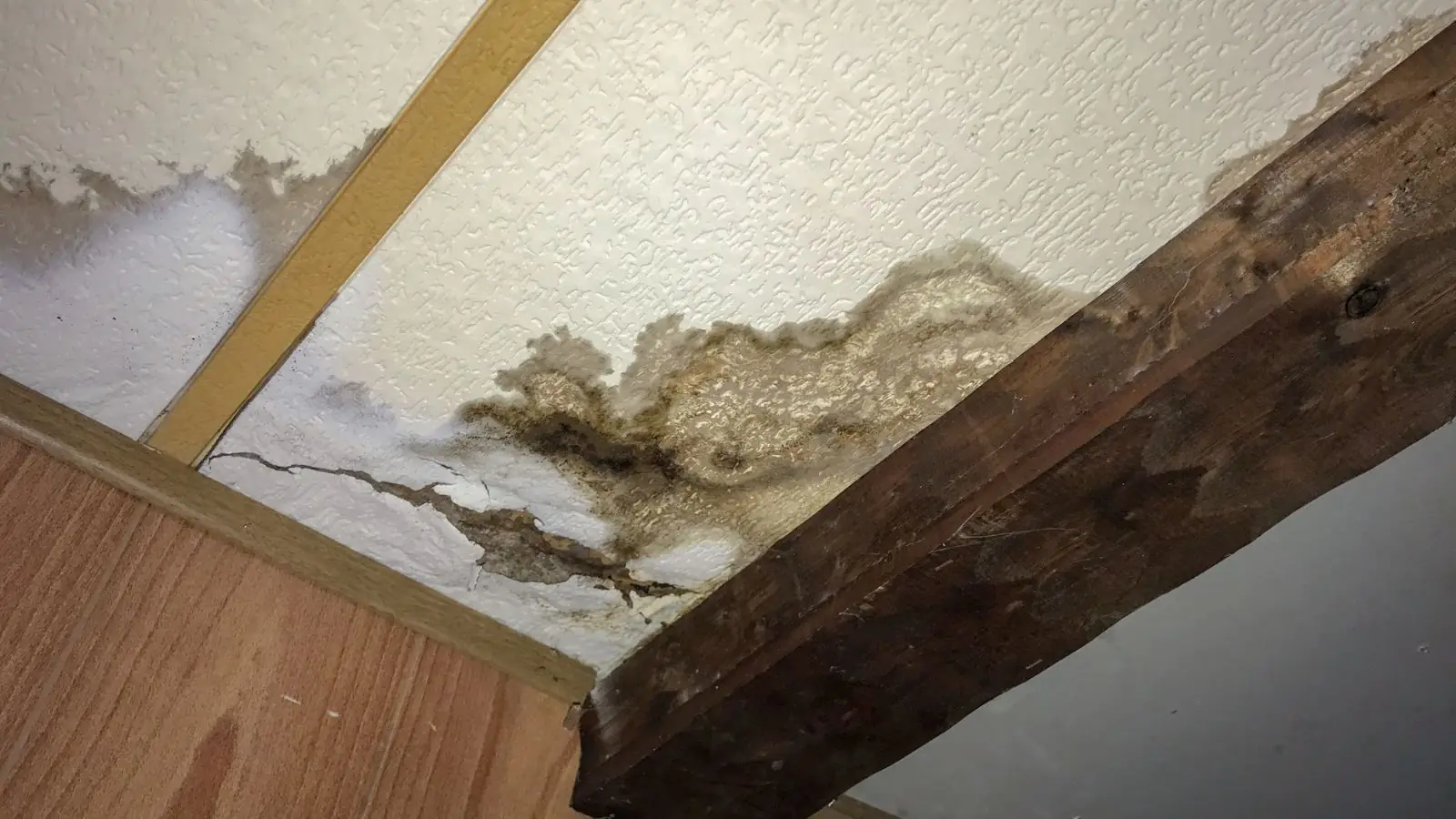
To remove mold from a ceiling, you first stop whatever is wetting it, then dry the material and clean or replace the affected area. Ceiling mold in a Lake Forest, CA home is almost always a symptom of water from above.
That water usually comes from the roof, a bathroom exhaust fan, upstairs plumbing or attic condensation. The sections below sort those causes, show safe small-patch handling and explain when the ceiling needs to come down.
Four usual causes of ceiling mold
A ceiling is the last layer water reaches, so the stain sits below the real problem. Matching the pattern to the source saves time and keeps you from cleaning something that will be wet again next week. The table below gives a quick guide.
| Ceiling clue | Likely source | Who fixes the source |
|---|---|---|
| Brown ring that grows after storms | Roof leak | A roofer |
| Dark patch near a bathroom | Weak or unvented exhaust fan | An electrician or HVAC contractor |
| Stain under an upstairs bathroom | Tub, toilet or supply leak | A plumber |
| Speckled growth across a wide area | Attic condensation | An insulation or HVAC contractor |
| Sagging, soft board | Long-term saturation | Fix the source, then restoration |
Roof leaks announce themselves after storms
A leak from a damaged shingle, cracked flashing or a pipe boot often leaves a stain that grows after rain and dries in between. Water travels along rafters and insulation before it drops onto the drywall, so the stain may sit several feet from the roof opening.
A roofer repairs the roof, and we do not do roofing. Once the roof is sealed, we handle the water removal, drying and water damage cleanup on the ceiling below. If the ceiling is dripping now, call a roofer for a temporary cover and call us for the water.
Bathroom fans, upstairs plumbing and attic condensation
A bathroom fan that vents into the attic dumps steam into cold insulation, which then drips back as condensation. The fix is a duct that runs outside. A fan that is clogged or too small has the same effect on the ceiling just below.
Upstairs plumbing leaks behave differently. They stain under the fixture, may show up after someone showers, and often bring a musty smell. A plumber repairs the fixture, and we dry the ceiling and framing. Attic condensation tends to leave a faint pattern across a wider area.
Small patch handling, step by step
- Confirm the source is repaired and the ceiling is no longer damp.
- Wear gloves, eye protection and a respirator rated for fine dust.
- Cover the floor with plastic and keep the room's vents closed.
- Vacuum the surface with a HEPA vacuum, then wipe with detergent and water.
- Dry with a fan, then confirm with a moisture meter before painting.
This works for a small, dry, painted patch. EPA says that when mold covers less than about 10 square feet, you can in most cases handle it yourself. The California Department of Public Health advises against bleach on mold, so detergent is the better default. Dry the area fully before any paint goes on, because primer over a damp ceiling traps the moisture and the stain returns.
Stop and call if the ceiling shows any of these
Soft or bulging drywall is more than a surface issue.
- ✓Sagging, bulging or cracking board
- ✓Water stains that reappear after you clean them
- ✓Growth covering more than about 10 square feet
- ✓Wet insulation visible through a gap
- ✓A ceiling that dripped sewage or dirty water
When the ceiling must come down
Drywall that stayed wet for more than a day or two may need removal, according to the California Department of Public Health. A ceiling that sags, bulges or has a stain that soaks through is holding water that surface cleaning cannot reach. Cutting it out lets the cavity dry and lets a crew check the insulation above. Wet insulation is heavy, holds water against the framing and usually gets replaced along with the board.
Crews use containment, a HEPA air scrubber and plastic to keep dust inside the room. Removing and replacing a ceiling falls under water damage repair, and building work of $500 or more needs a licensed contractor under CSLB rules.
Insurance enters the picture when a ceiling leak is sudden, such as a burst upstairs pipe or a storm that tore off shingles. Slow leaks and neglect are often treated differently, and flood is usually excluded. Check your policy, ask your insurer, and never assume a claim will be approved.
- ✓Ask your insurer whether the cause counts as sudden, since slow leaks are often treated differently
- ✓Photograph the stain and keep receipts for emergency repairs
- ✓Report the damage right away and take reasonable steps to stop more
- ✓Get written bids from licensed contractors for repairs
Ceiling stained, soft or dripping?
Call and tell us what you see. We will explain the next steps in plain terms.
Where we fit in
We do not repair roofs, fix plumbing or remove asbestos or lead. We do handle the water, the drying, the mold remediation and the rebuild once the source is fixed. Crews also serve Laguna Hills and Rancho Santa Margarita, and our professionals are licensed and insured.
Cost depends on the water category, area affected, materials, days of drying and equipment, and rebuild scope. For your real number, call (949) 670-0939.
Questions homeowners ask
On a small, dry, painted patch under about 10 square feet, a homeowner often can. Fix the water source first, use a HEPA vacuum and detergent, and dry the area. If the ceiling is soft, hidden or large, call a professional.
Steam from showers settles on the coldest surface in the room, often the ceiling. A weak, clogged or unvented fan leaves moisture behind. Check airflow with a tissue and make sure the duct runs outside.
Not always. A dry, firm, stained ceiling may only need cleaning or stain blocking after the source is fixed. A ceiling that is soft, sagging or soaked usually needs to come down so the cavity can dry.
If your home is old, yes. CSLB says ceiling coatings from 1945 to 1978 may contain asbestos, and EPA's lead rule covers paint in pre-1978 homes. Do not disturb the surface until a qualified professional has checked it.
NOAA normals from the nearest airport station put the wettest months at January, February and March. Look for new ceiling stains after storms in that stretch, and call a roofer to confirm the source.