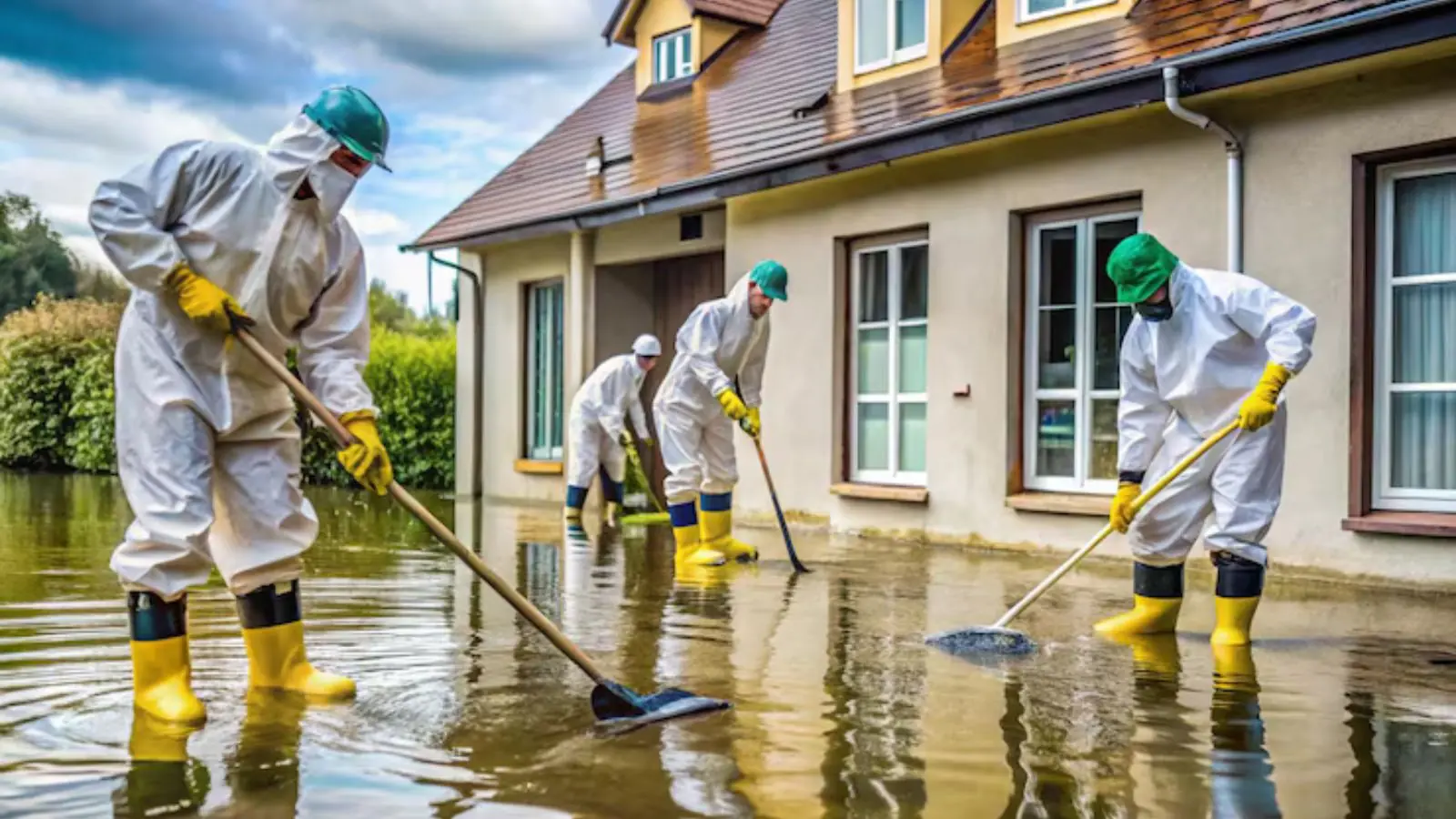
Sewage backup cleanup in Lake Forest, CA is the removal of contaminated water and the materials it touched, followed by disinfecting and drying the space. Under IICRC S500 it is Category 3 water, the grossly contaminated class that also includes rising floodwater.
A backup can start from a toilet, a floor drain, a tub or a shower. It tends to appear in the lowest fixture in the house first. Treat it as a safety event before you treat it as a cleanup job.
Stay out first, then make the calls
The EPA advises calling a professional experienced with contaminated water. That is the safest starting point. Keep children, pets and anyone vulnerable out of the affected rooms, and avoid touching the water or the surfaces it reached.
Do not run more water. Stop using toilets, sinks, the dishwasher and the washing machine, because every flush or drain pushes more into the house.
Shut off power to the affected area only if the panel is dry and you can reach it without stepping in water. If the water is near outlets or the panel, leave it and call an electrician.
Open windows if you can do it from a clean, dry spot. Do not use a household wet vacuum on sewage, since it spreads contamination through the exhaust.
Who to call: line, plumber or restoration
| Who | What they handle | When to call |
|---|---|---|
| Sewer agency or city | The public main line in the street | If neighbors have backups too or the main may be blocked |
| Plumber | Your private lateral and drain lines | To clear a clog or inspect the line |
| Restoration crew | Water extraction, removal, disinfecting and drying | As soon as the source is identified |
| Your insurer | Claim and coverage questions | Right away, before cleanup starts |
A blockage in your own lateral is a plumber's job. A blockage in the public main is for the sewer agency. You often cannot tell which until someone looks, so calling the agency first is a reasonable move.
We do not do plumbing repair. We handle the cleanup that follows once the source is controlled. Our sewage and contaminated water cleanup work begins with extraction.
What professional cleanup involves
Contain and protect
Crews set containment barriers and protective gear so contamination does not spread to clean rooms.
Extract the water
Truck-mounted or portable units remove standing sewage from floors.
Remove porous materials
Carpet, pad, drywall and insulation that touched Category 3 water are cut out and bagged.
Clean and disinfect
Hard surfaces and framing are cleaned and treated with antimicrobial products.
Dry and verify
Air movers, dehumidifiers and HEPA air scrubbers run until readings match the dry reference.
Most of the work is removal. Drying alone does not make porous materials safe after sewage contact. Cleaning and disinfecting come after the contaminated material is out, and then structural drying follows, which takes about 3 to 5 days in a typical job. That is typical, not a promise.
Our emergency water removal service handles the extraction stage, with a crew sized to the affected area.
What is not salvageable
| What was affected | Keep or discard | Reason |
|---|---|---|
| Carpet and pad | Discard | Porous, holds contamination |
| Drywall and insulation | Discard the wet part | Wicks and holds contaminated water |
| Solid wood framing | Keep, clean and disinfect | Can be cleaned and dried |
| Tile and sealed concrete | Keep, clean and disinfect | Hard, nonporous surface |
| Upholstered furniture | Usually discard | Fabric and foam absorb contamination |
| Hard-surface items | Often keep after cleaning | Can be cleaned thoroughly |
Before anything is thrown away
Photograph the damage first, since your insurer may ask for it:
- ✓Take photos of the affected rooms and the items to be discarded
- ✓Write a simple list of discarded belongings
- ✓Keep receipts for emergency work
- ✓Ask your insurer before removing large items if possible
The insurance backup question
Standard homeowners policies often exclude sewer or drain backup unless an endorsement was added. Flood is usually excluded as well and needs separate flood coverage. Ask your insurer whether you have a water backup endorsement, and check your policy.
California policyholders must take reasonable steps to prevent further damage, keep receipts, and report the loss right away. Insurers must acknowledge a claim within 15 calendar days. We cannot say what any insurer will pay.
CDI advises getting written bids from licensed contractors. Building work of $500 or more requires a licensed contractor under CSLB rules.
Our crews document the work so you have records for your claim. Keep a written list of what was discarded, with photos, and share it with your insurer when they ask.
Ask the crew to explain which rooms are being treated as contaminated and which are not. That boundary decides where containment barriers go and how far removal reaches.
Odor is a poor guide to what is safe. A room can smell fine after cleanup and still hold contaminated material inside a wall cavity or under flooring. Moisture meters and a thermal imaging camera help the crew find those hidden spots, and any wet porous material in them is removed, not left to dry.
Cleaning the framing is where the work slows down. Crews scrub, wipe and treat each exposed stud and plate, then dry them until the readings match the dry reference. Rushing this step is how smells and problems come back later.
Sewage in the house?
Call (949) 670-0939 now, 24/7 dispatch for contaminated water.
Mold can follow if materials stay wet, because mold needs moisture. The EPA says to dry water-damaged areas within 24 to 48 hours. Mold work follows S520 practice, and we do not offer mold testing.
We also send crews to Irvine and Aliso Viejo, where backups call for the same cautious steps.
- Stop using all water in the house
- Keep people and pets out
- Do not use household vacuums or mops on sewage
- Identify your sewer agency from your bill or the city
- Call a professional experienced with contaminated water
Questions homeowners ask
The EPA advises calling a professional experienced with contaminated water. Sewage is Category 3, and the safest path is to let trained crews with proper protection handle it.
Carpet and pad are porous and hold contaminated water. Cleaning does not reliably remove what soaked into the fibers and pad, so removal is standard practice.
It depends on your policy. Backup coverage is often an endorsement. Check your policy and ask your insurer before cleanup starts.
A plumber can inspect your private lateral. If neighbors also have backups, call your sewer agency. You often cannot tell until someone checks, so call both if unsure.
It depends on the address. IRWD wastewater from the city is treated at the Los Alisos Water Reclamation Plant, and ETWD provides sewer in its southeast area. Check your bill or ask the city.