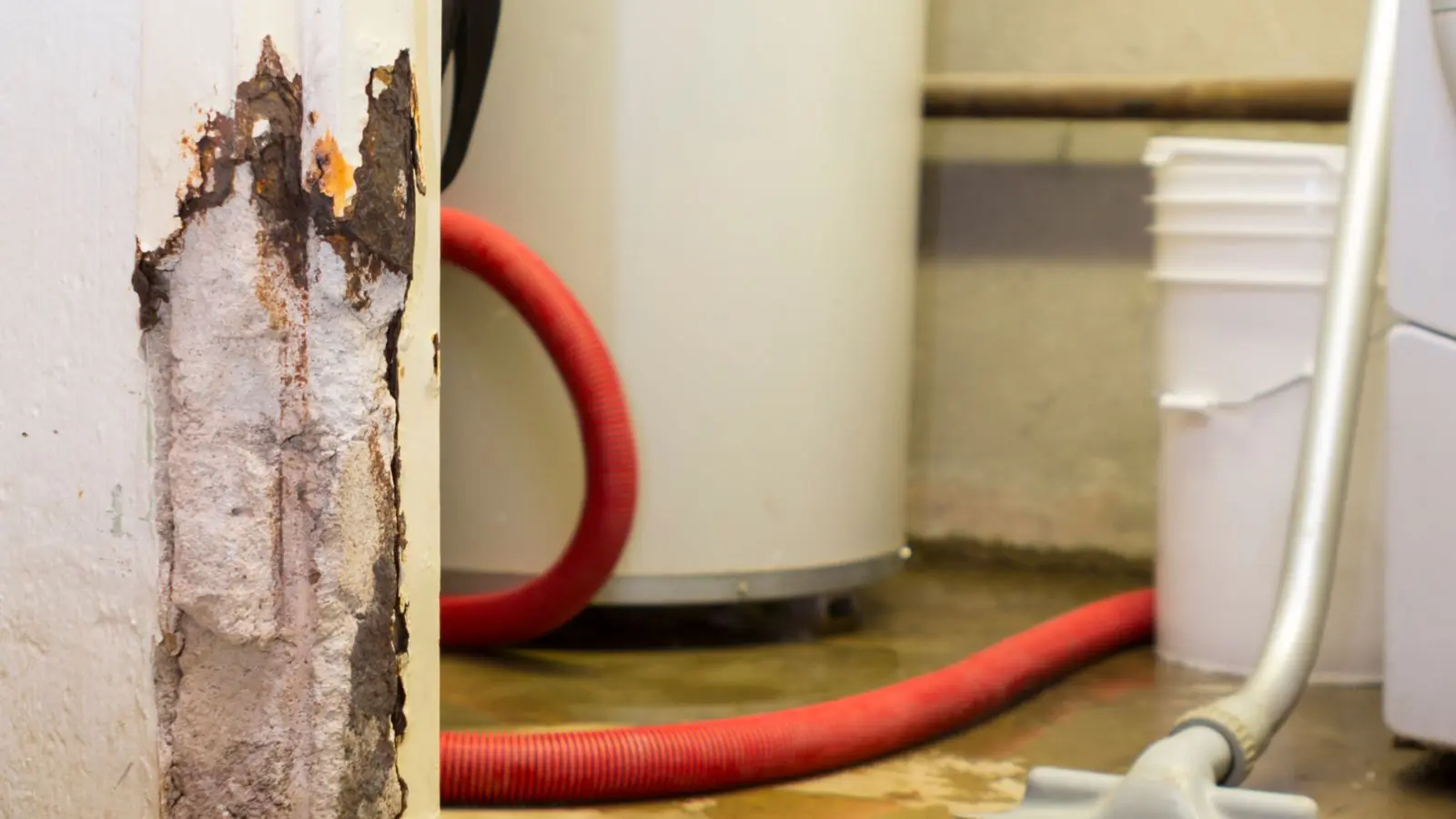
Water heater leak damage in Lake Forest, CA is the wetting of floors, walls and belongings that follows a tank leak, a failed connection or a relief valve discharge. The cause may be small, but the tank holds dozens of gallons of water, and 40 and 50 gallon tanks are common sizes.
A slow drip may soak the floor for weeks before anyone looks. A split tank can empty onto the floor within minutes. Either way, the response is the same order of steps, and the repair splits between a plumber and a restoration crew.
Where the water goes depends on where the heater sits
| Where the heater sits | How water spreads | What to check |
|---|---|---|
| Garage | Runs across the slab, into walls and toward living space | Bottom plates, stored boxes, shared wall with the house |
| Hall or utility closet | Soaks carpet and flooring through the closet door | Baseboards, adjacent rooms, floor under the door |
| Attic | Drips through the ceiling below, often hidden at first | Ceiling stains, insulation, light fixtures |
| Interior laundry room | Moves under flooring and into cabinets | Cabinet bases, vinyl or laminate seams |
| Exterior closet | Wets the slab edge and exterior wall base | Stucco base, door thresholds, nearby planters |
Garage heaters are the easiest to deal with because concrete does not swell. But the wall between the garage and the house holds drywall, insulation and wood plates that wick water upward. Closet heaters are harder because carpet and baseboards sit right at the door.
Attic units are the worst for surprise. The first sign is often a brown stain on a ceiling, and by then insulation and drywall are already holding water.
Shutting things off safely
Close the cold water supply
There is a shutoff valve on the cold line above the heater. Turn it clockwise. If it will not move, use the main shutoff.
Turn off power or gas
For electric units, switch off the breaker if the panel is dry. For gas units, turn the gas control to off or close the gas valve.
Stay out of standing water
Do not touch the heater or wiring while standing in water. Wait for an electrician or use a dry route to the panel.
Do not drain the tank yet
Leave the tank alone until a plumber looks at it unless a professional tells you otherwise.
Photograph and call
Take photos of the heater and the wet areas, then call a plumber and a restoration crew.
If you smell gas, leave the home and call the gas utility from outside. Gas and water problems together call for a professional before anyone tries to fix anything.
Hot water from a relief valve line is a warning sign, not a leak to ignore. Mention it when you call the plumber.
What the water does inside the building
Drywall wicks water upward from the floor, often several inches above the visible wet line. The bottom plate, the horizontal wood at the base of the wall, can stay wet longer than the drywall and takes the longest to dry. Baseboards trap water behind them.
Flooring reacts by type. Carpet pad holds water like a sponge. Wood cups, vinyl lifts at seams, and tile is usually fine on top but may hide wet subfloor underneath.
Heater water is normally Category 1 when fresh, but it can pass through dirty stored items, insulation and old dust, which raises concerns after a few days. This is one reason the EPA's 24 to 48 hour drying window matters.
A moisture meter and a thermal imaging camera map where the water traveled. Our water damage cleanup crews start with extraction, then plan drying around those readings.
What often needs to come out
After a tank failure, these materials are most often removed or cut back:
- ✓Wet carpet pad and sometimes the carpet
- ✓Drywall cut 2 feet above the water line where wicking is clear
- ✓Baseboards that trap water behind them
- ✓Wet insulation in the wall or attic
- ✓Cardboard boxes and stored items on the floor
Who fixes what
A plumber replaces or repairs the heater and the connections. We do not do plumbing repair. A restoration crew dries the structure and rebuilds the damaged areas afterward. Both jobs need to happen, and they should not wait on each other.
If the heater is replaced first and the wall stays wet, mold can follow. Mold needs moisture, so drying quickly is the best control. Remediation follows ANSI/IICRC S520 practice if growth is found.
Our water damage repair team handles the rebuild: drywall, paint, baseboards and flooring. Building work of $500 or more requires a licensed contractor under CSLB rules, so ask any company about its license.
A permit may be needed for heater replacement or for rebuild work. Ask the city building department, since rules vary by job.
Heater failed and the floor is wet?
Call (949) 670-0939 for extraction and drying, 24/7.
Insurance questions to ask
Sudden and accidental water damage is often covered, while gradual leaks and neglect often are not. A tank that splits suddenly is a different claim from one that dripped for months. Check your policy and ask your insurer how it treats each.
California policyholders must take reasonable steps to prevent more damage and keep receipts. That includes shutting off water and drying the home. Photos of the heater and the wet areas help.
- Keep the failed heater parts or photos of them until the claim is settled
- Save receipts for the plumber, extraction and drying equipment
- Ask your insurer in writing what it covers for the tank, the water damage and the rebuild
- Get written bids from licensed contractors, as CDI advises
We also send crews to Mission Viejo and Irvine, where heater failures lead to the same set of questions.
Questions homeowners ask
A tank holds dozens of gallons, and 40 and 50 gallon tanks are common sizes. A rupture can release much of that quickly, while a slow leak spreads over days.
Wait for a plumber unless you know how to do it safely. Hot water can scald, and gas or electric power has to be handled first.
Fresh tank water is usually Category 1. It can degrade as it passes through dirty materials or sits, so quick extraction and drying help.
Sometimes. If readings show water in the wall cavity that cannot dry in place, crews cut a section back and rebuild after drying.
We make no claim about lifespan. IRWD data shows hard water, and mineral scale can build up in tanks, so ask a plumber about flushing and inspecting yours.